

Location silo · Anchorage
Manta Point, and the honest version of the odds
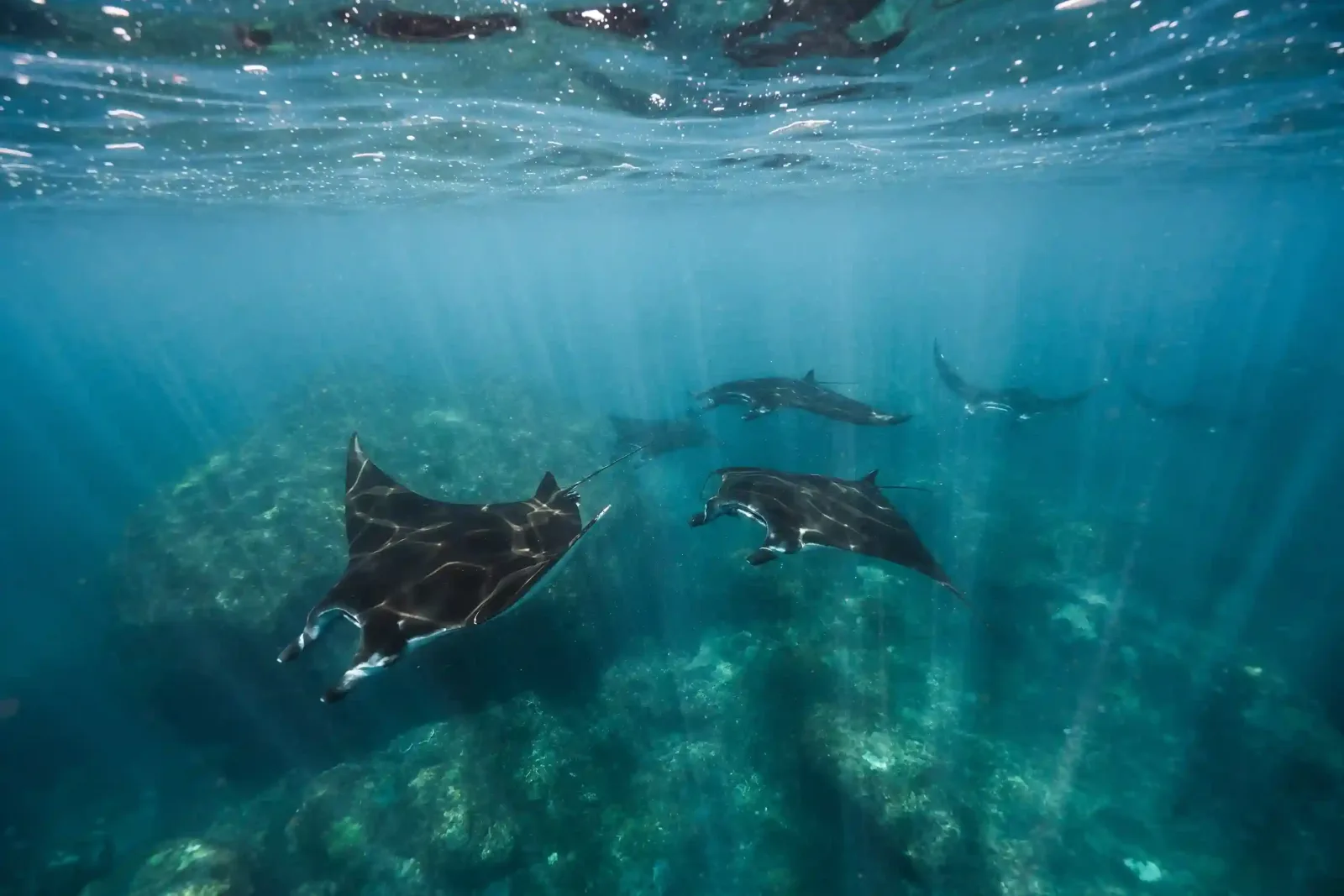
A cleaning station in moving water where manta rays queue to be picked clean. Seasonal, tide-dependent, and never something anyone can promise you.
- Animals, peak aggregation
- 20
- Metre wingspan, largest
- 7
- Hour in the water, typical
- 1
At a glance
- Best daypart
- Morning tide
- Peak season
- Nov – Apr
- Time in water
- ~1 hr
- Access
- Snorkel or dive
- Current
- Moderate to strong
Outside the peak window we substitute another reef rather than take you to an empty cleaning station and call it bad luck.
What is actually happening
A cleaning station, not a feeding ground
Currents push nutrient-rich water across a shallow reef. Cleaner wrasse work the site, and manta rays arrive to hover while the fish pick parasites off their skin and gills.
They come for the service, not for you. That is why the etiquette below matters more here than at any other stop in the park.
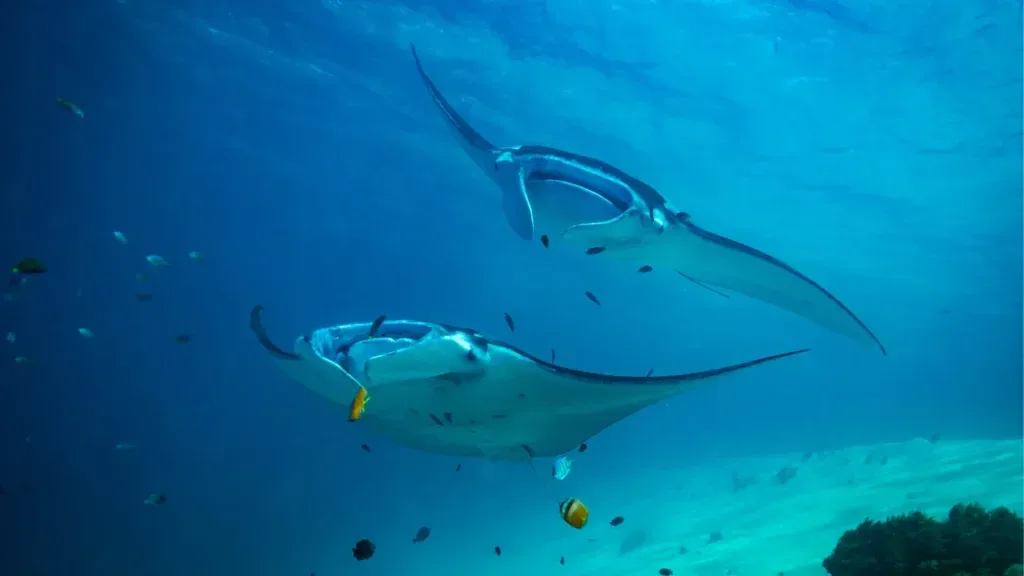
- Reef mantas, typically three to five metres across
- They hover in the current rather than swim past
- Numbers rise sharply in the peak months and fall off outside them
Getting in
Snorkel, or dive it
This is one of the few sites where the snorkellers often get the better experience.
- Snorkel
From the surface
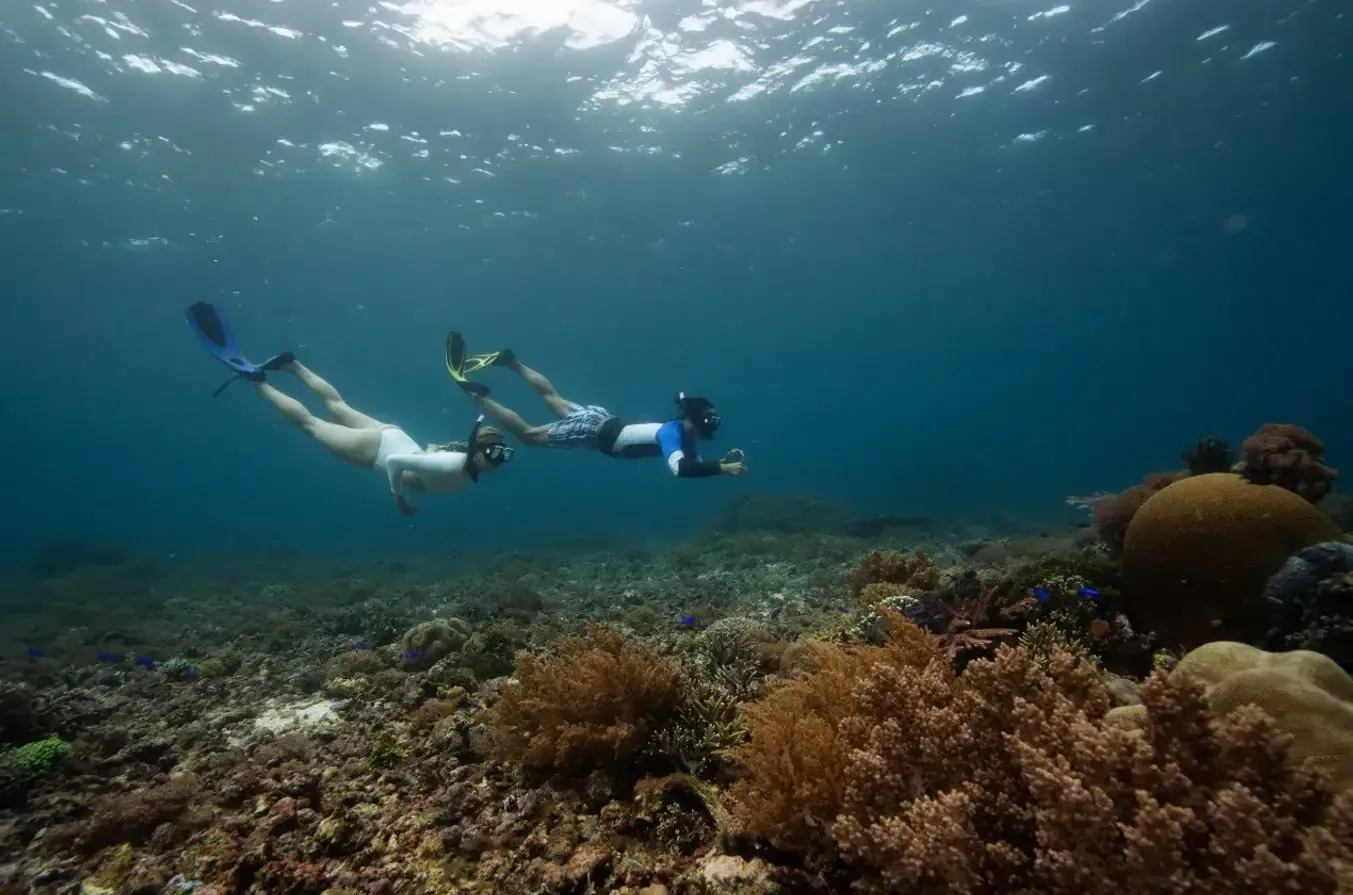
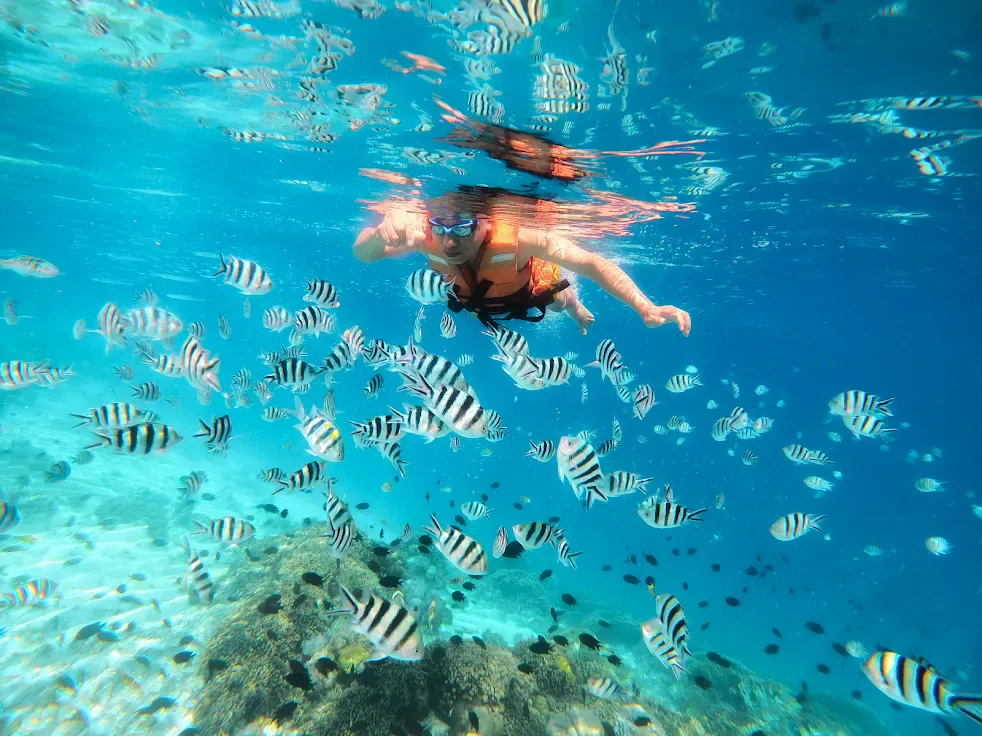
Mantas hover shallow at the station. From the surface you can follow them across the site without a depth limit or an air budget.
No certification needed
- Open Water
Guided descent
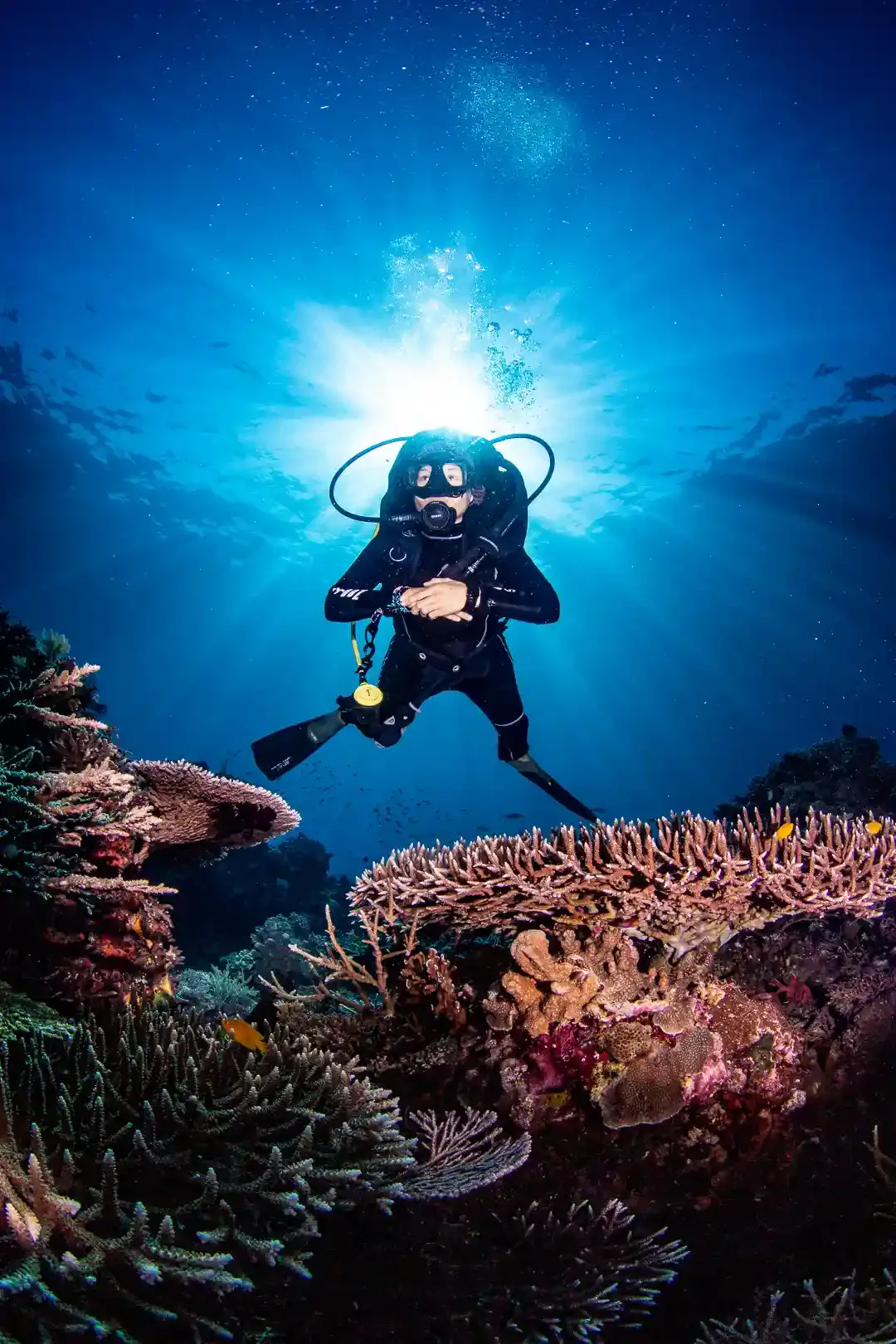
A guided dive on the station in moderate current, positioned to one side rather than above.
Guide-led, depth-limited
- Advanced
Drift the site
Stronger current days, where the drift takes you along the reef and the animals come to you.
Nitrox available
Non-divers are not getting a lesser version here. Following a manta from the surface for twenty minutes is something no dive plan allows.
Timing it
Why the boat leaves early
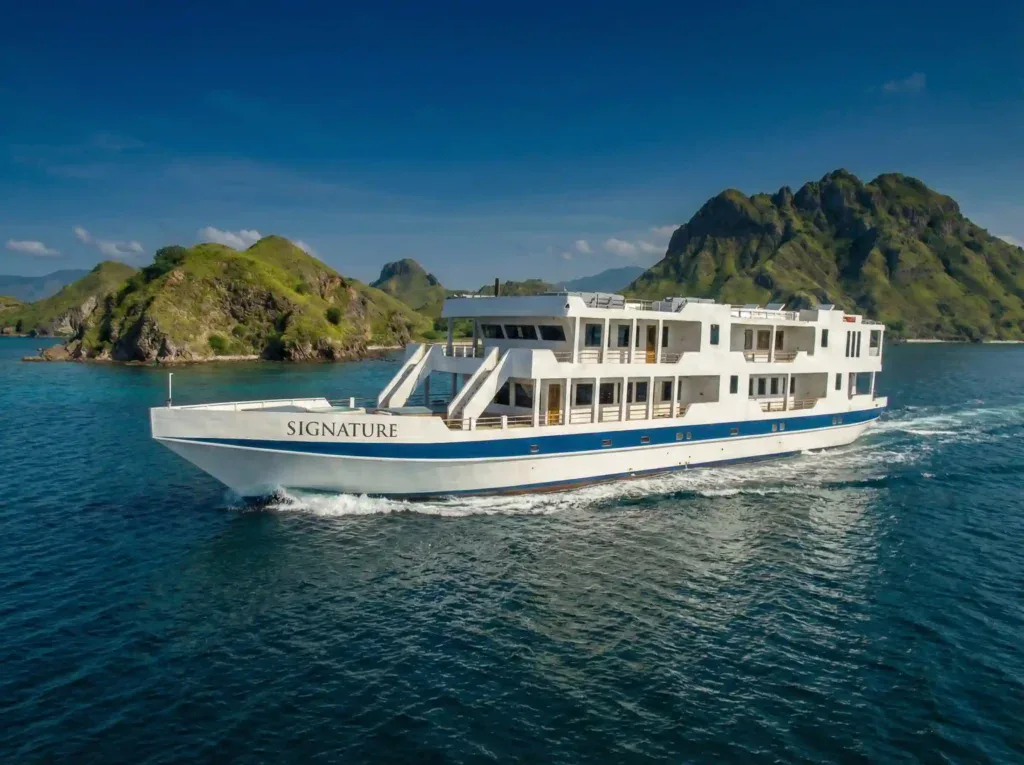
The site works on tide, not on the clock. A charter anchored nearby overnight can meet it; a day trip usually cannot.
-
Night before
Anchor within reach
Overnight at a neighbouring bay so the site is twenty minutes away rather than two hours.
- Overnight anchorage
-
Pre-dawn
Crew check the water
Current direction and strength assessed before anyone gets in. Some mornings the answer is no.
- Conditions check
-
Morning tide
Entry
Briefing, then in. Roughly an hour, in small groups, with a guide in the water throughout.
- Briefing
- snorkel or dive
-
After
Second attempt, or move on
On a multi-day charter a quiet morning can be retried the next day. That is the buffer a longer trip buys.
- Repeat
- or next site
If the current is running hard the crew will call it off. That is a safety decision, not a scheduling one, and it is not negotiable.
From the water
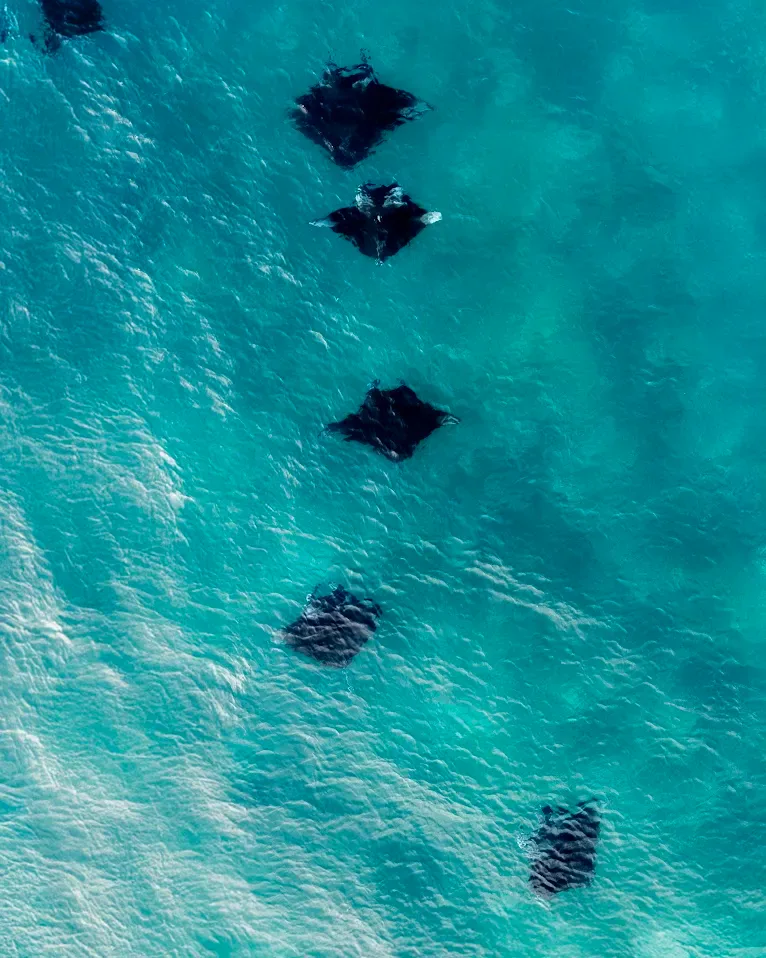
What comes back on the camera
Tap any image to open it full size.
The rules that matter
How not to empty the site
Mantas leave a station that gets crowded or chased. Every guide briefs this before entry, and it is worth reading now.
-
Stay off the station
Never hover directly above it. The cleaner fish stop working and the mantas move on.
-
No touching
Their skin carries a mucus layer. Contact damages it and stresses the animal.
-
Do not chase
Hold position and let them pass. Swimming at one ends the encounter for everybody.
-
No flash close up
Ambient light only when they are near. Strobes at distance if you must.
-
Small groups
Guides stagger entries rather than putting everyone in at once.
-
Mind the fins
Kicking up sand over a cleaning station is the fastest way to clear it.
Six honest answers
Before you swim it
Same route
What sits either side of it
Get a firm quote
Come in season, and anchor near it
Send your dates. We will tell you honestly whether they fall in the window, and build the route so the tide is reachable.
By sending you agree we may reply by email or WhatsApp about your charter.
- Anchored within reach of the tide
- Snorkel or dive, your choice
- Second attempt on multi-day trips