

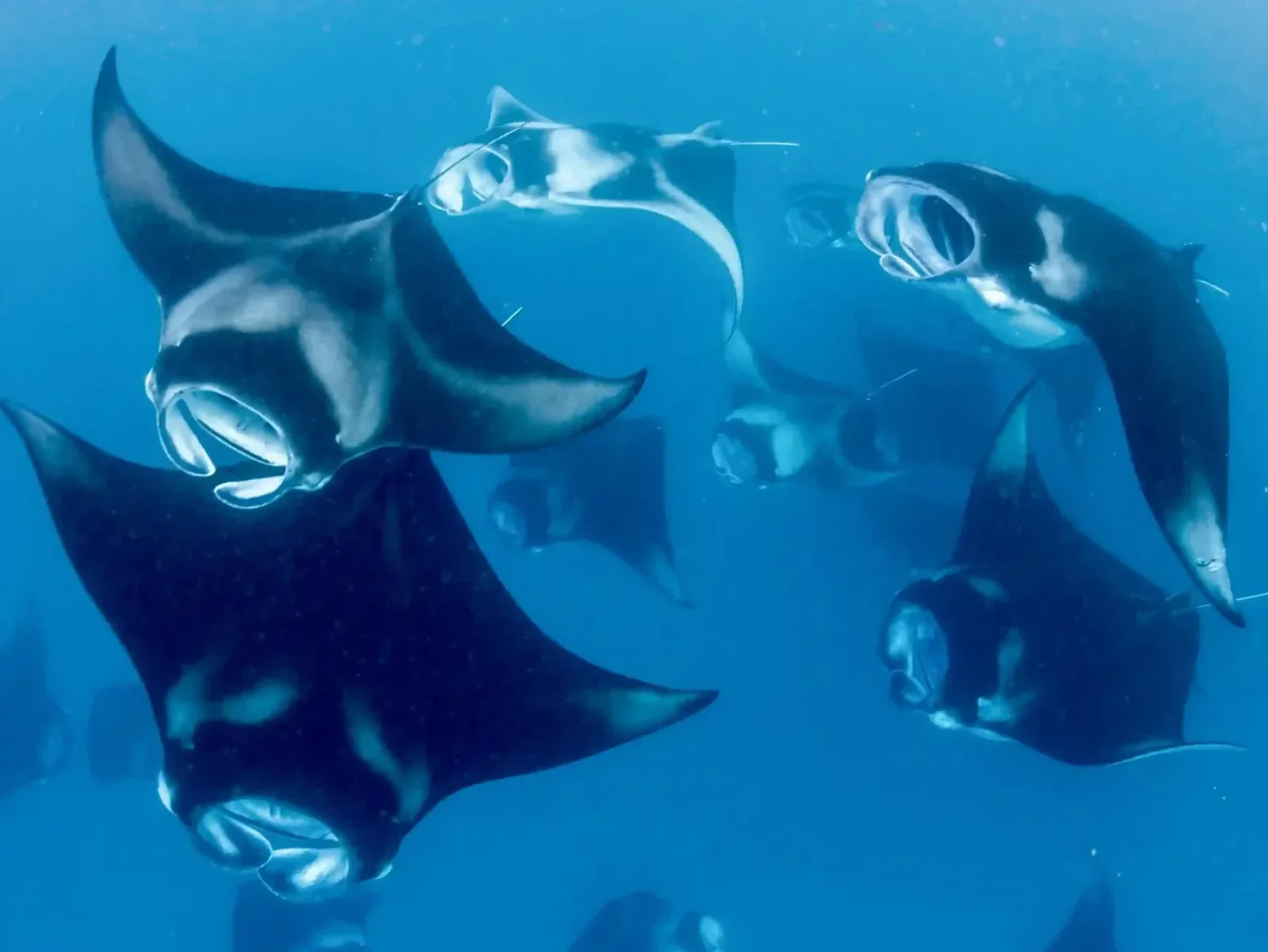
 Peak Nov–Apr
 Manta Point
In season, aggregations of ten to twenty animals sharing a single site.
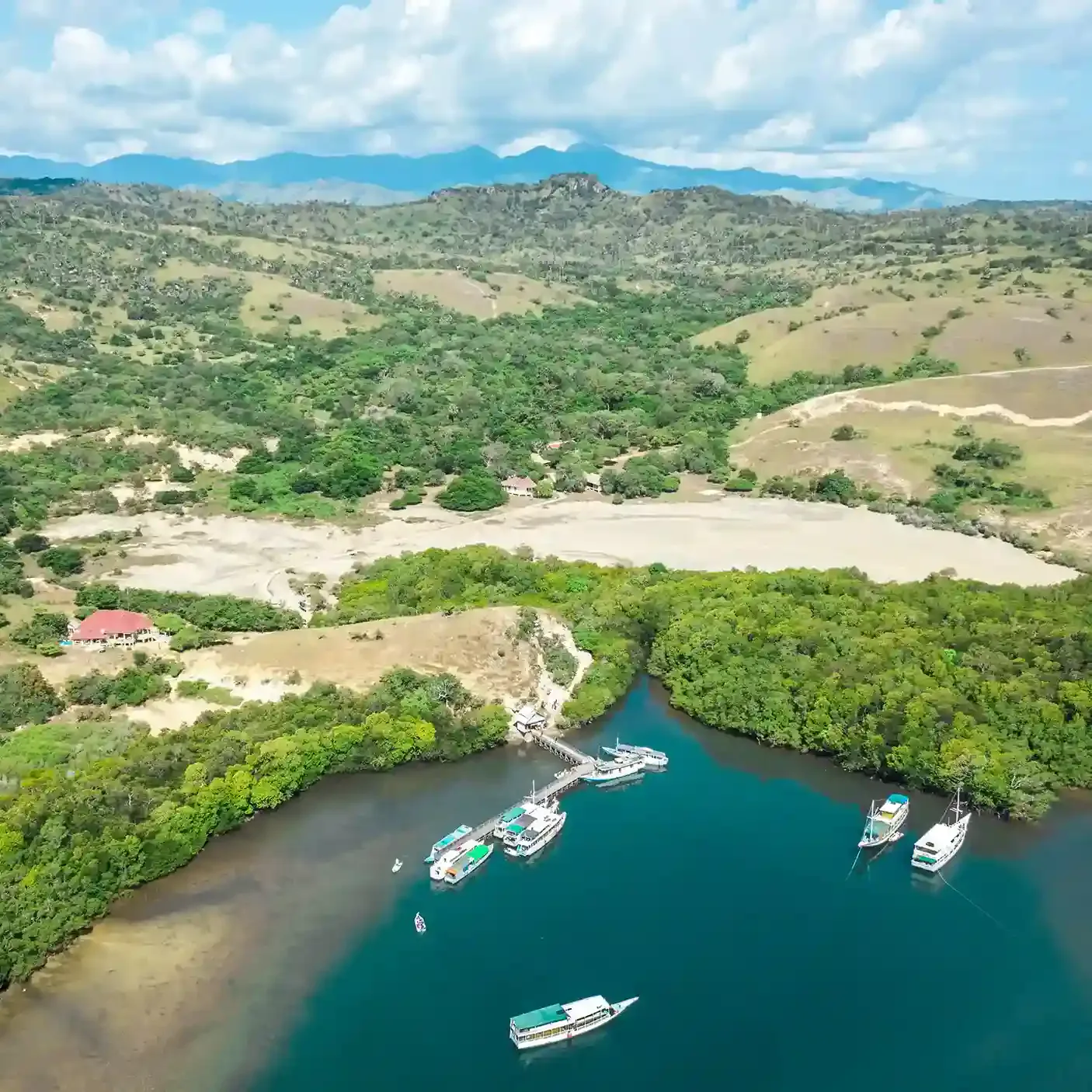
Audience silo · Maximum bottom time
Day boats dive when they arrive. A liveaboard dives when the current is right — before dawn, at midday, after dark. That is the whole argument.
Why it beats a day boat
Komodo's best sites scatter across a lot of water. A day operation spends the good hours travelling to them and the rest travelling back.
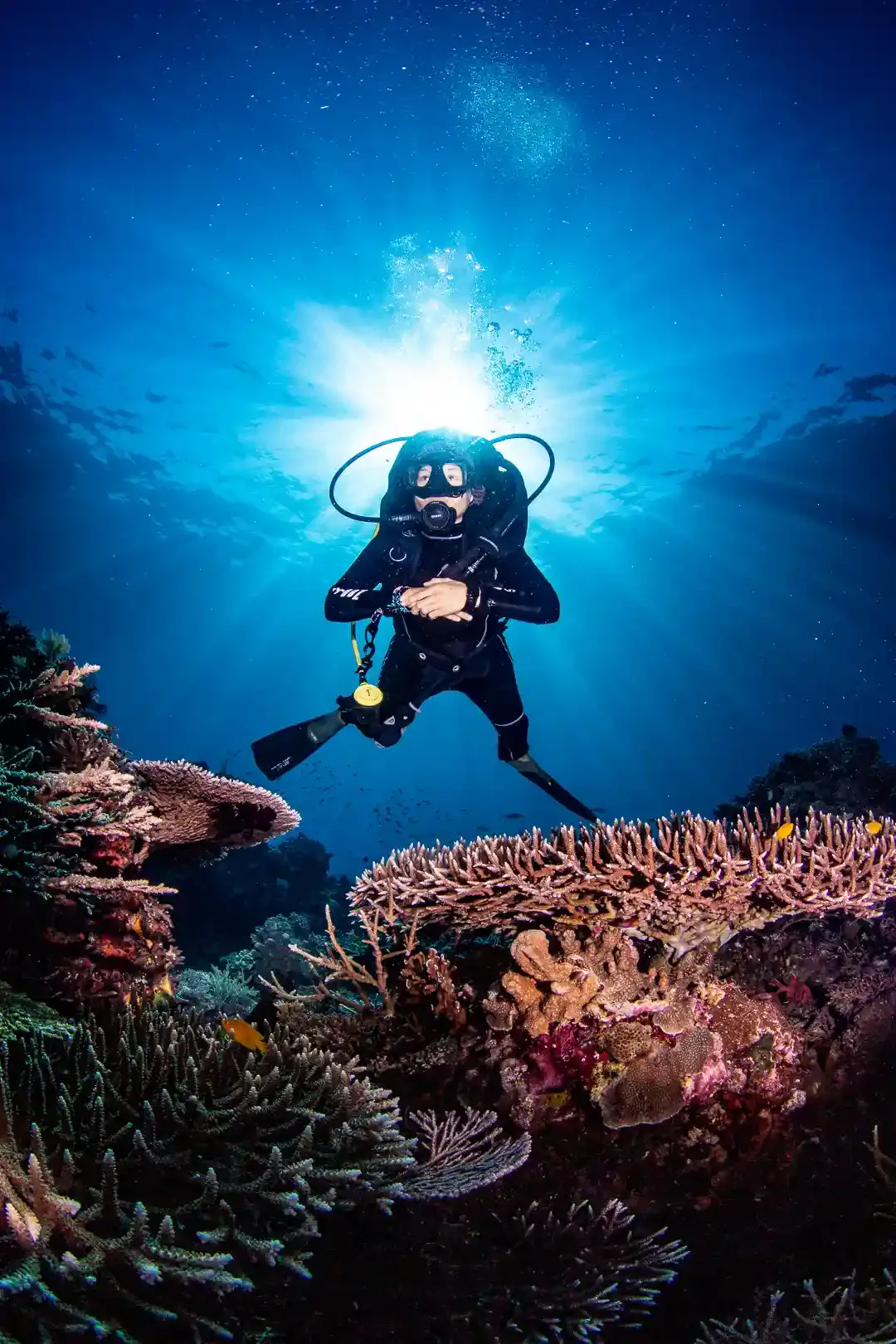
Staying aboard means you are already there when the current turns, when the mantas arrive, and when the reef comes alive after dark.
A day aboard
Sites and timings are set by current and certification each morning. This is the rhythm they fit into.
Before dawn
Calm water and the most wildlife activity of the day. Briefing on deck in the dark.
Mid-morning
A different site or the same one at a different tide. Surface interval and breakfast in between.
Midday
Best light of the day, which is when the photographers want to be in.
Late afternoon
A site the morning did not reach. Gear rinsed and reset while the boat repositions.
After dark
Optional. Bioluminescence and an entirely different set of animals on the same reef.
Nobody has to do all five. Divers sit out whatever they want; the schedule is a menu, not a requirement.
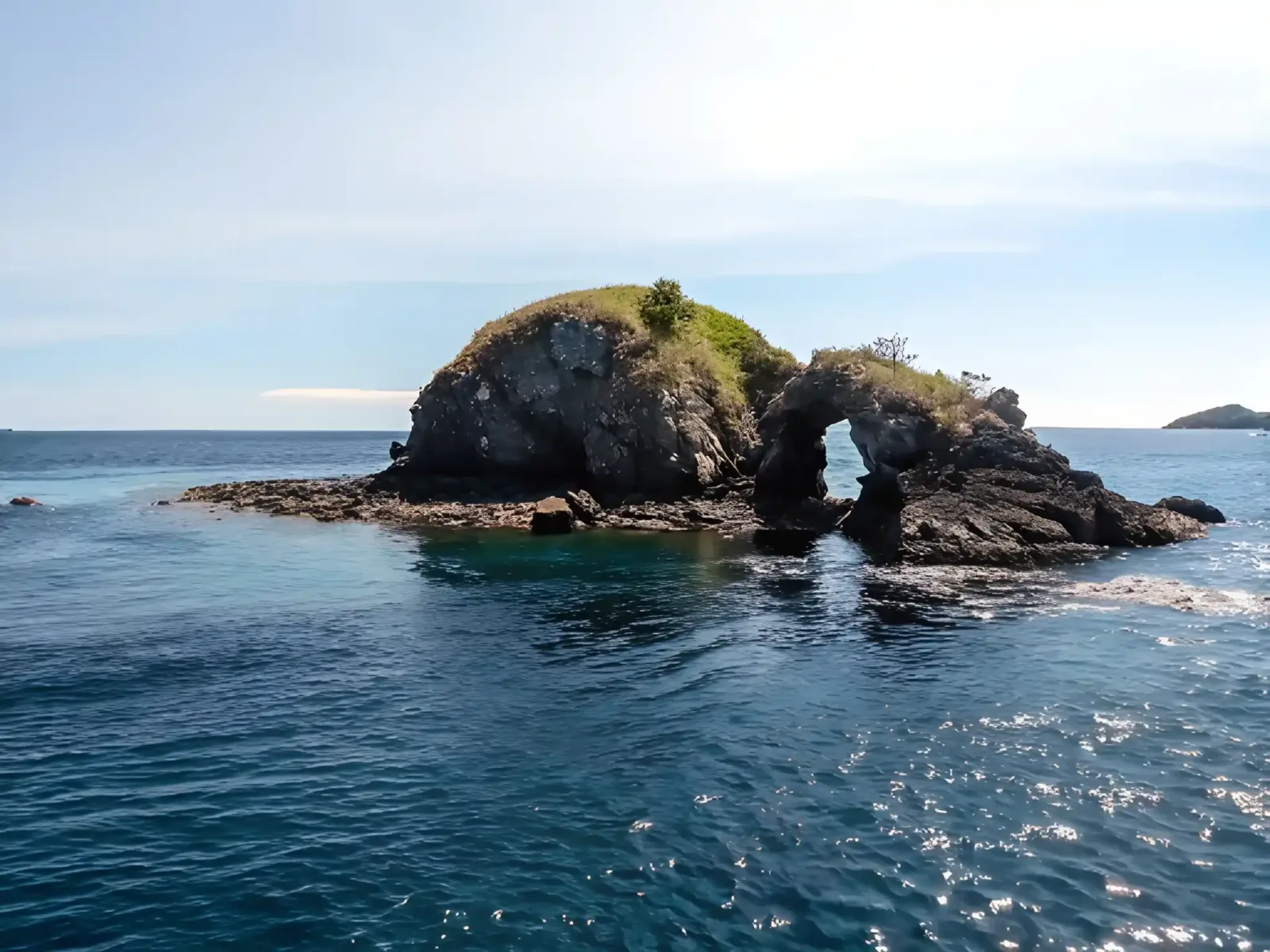
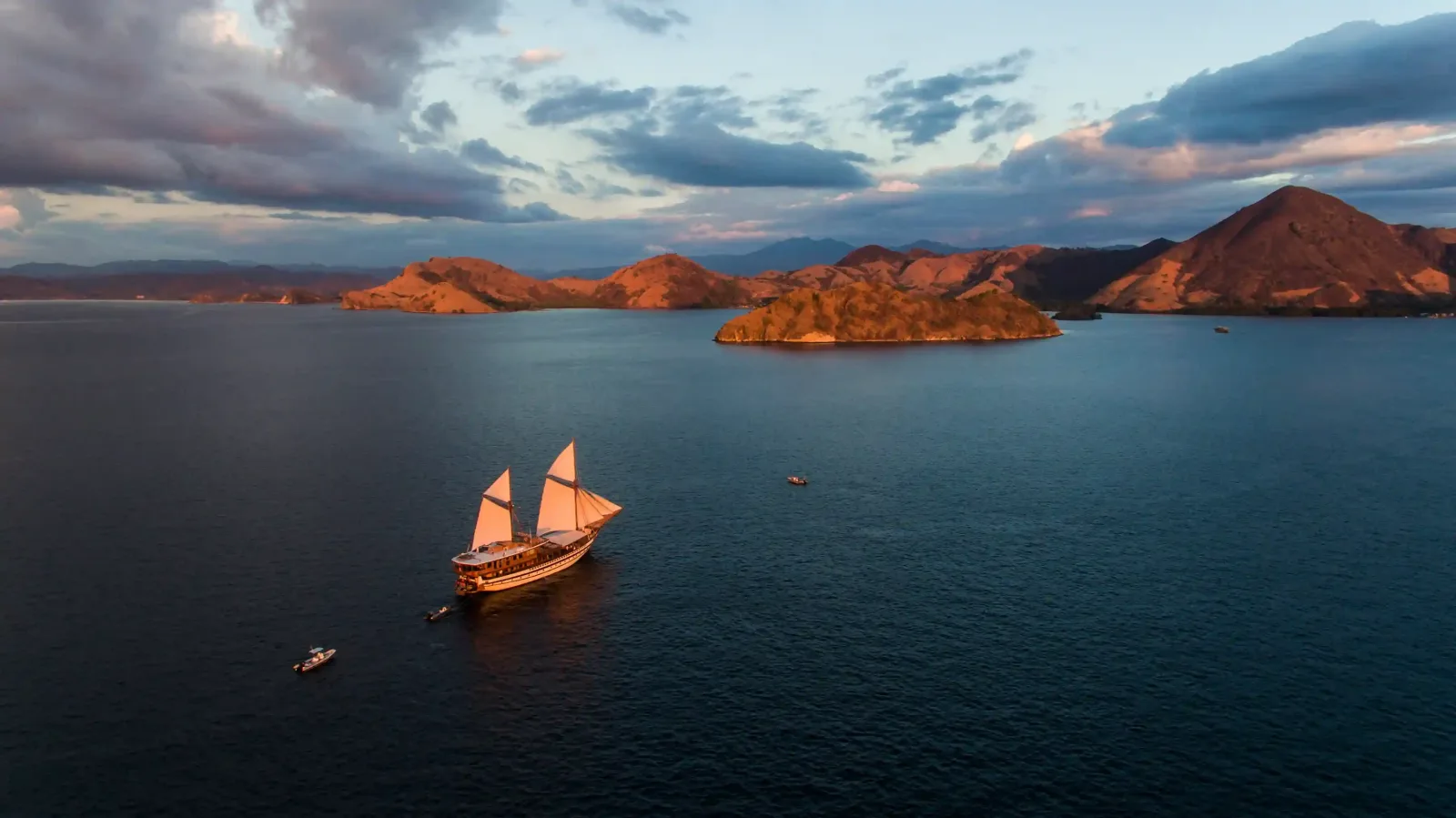
Where the boat sits
These are the anchorages a liveaboard positions among overnight, rather than commuting to.
Peak Nov–Apr In season, aggregations of ten to twenty animals sharing a single site.
 Advanced
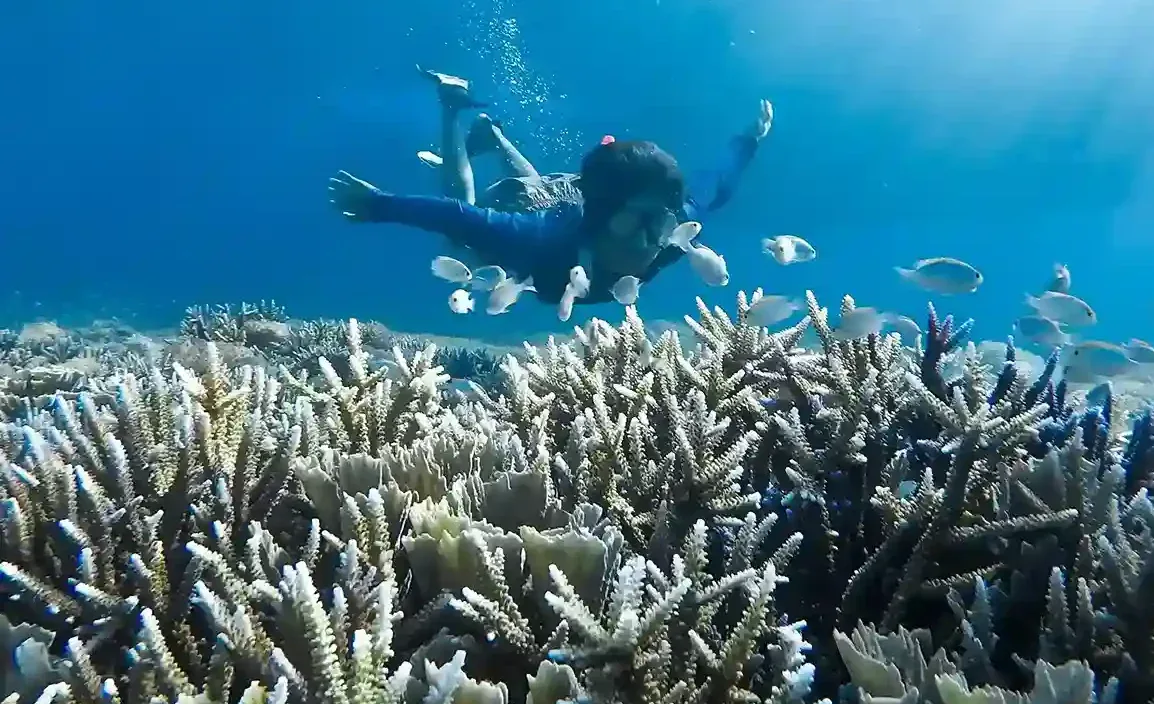
 Coral gardens rising from deep water, trevally and fusilier schools, consistent large animals.
 All levels
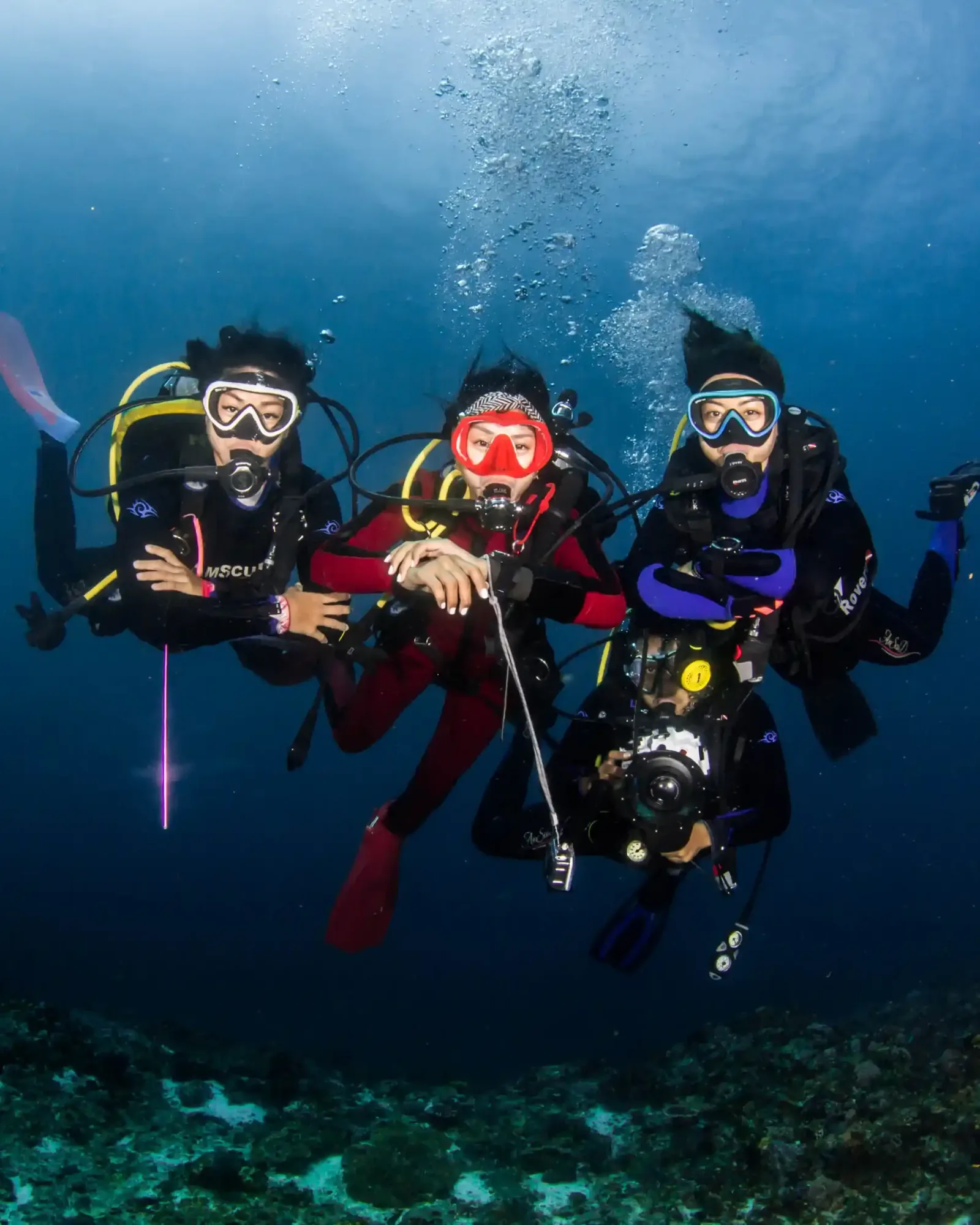
 Diverse profiles at several depths — the site that suits a mixed-certification group.
 Remote
 Endemic fish found nowhere else, and rarely another boat on the surface.
By certification
Divers are matched to sites individually. Safety first, then a level of challenge worth having flown here for.
Protected sites with little current while buoyancy and air consumption settle.
Guide-led, depth-limited
Mid-depth sites with manageable drift and reliable reef life.
Nitrox available
Strong current, deeper profiles and the pelagic encounters that come with them.
Computer-guided profiles
Deep, nitrox and rescue courses run inside normal diving. Technical training on request.
Counts toward your log
Divemasters follow the group throughout every dive, tracking bottom time, air and anything that needs intervening on.
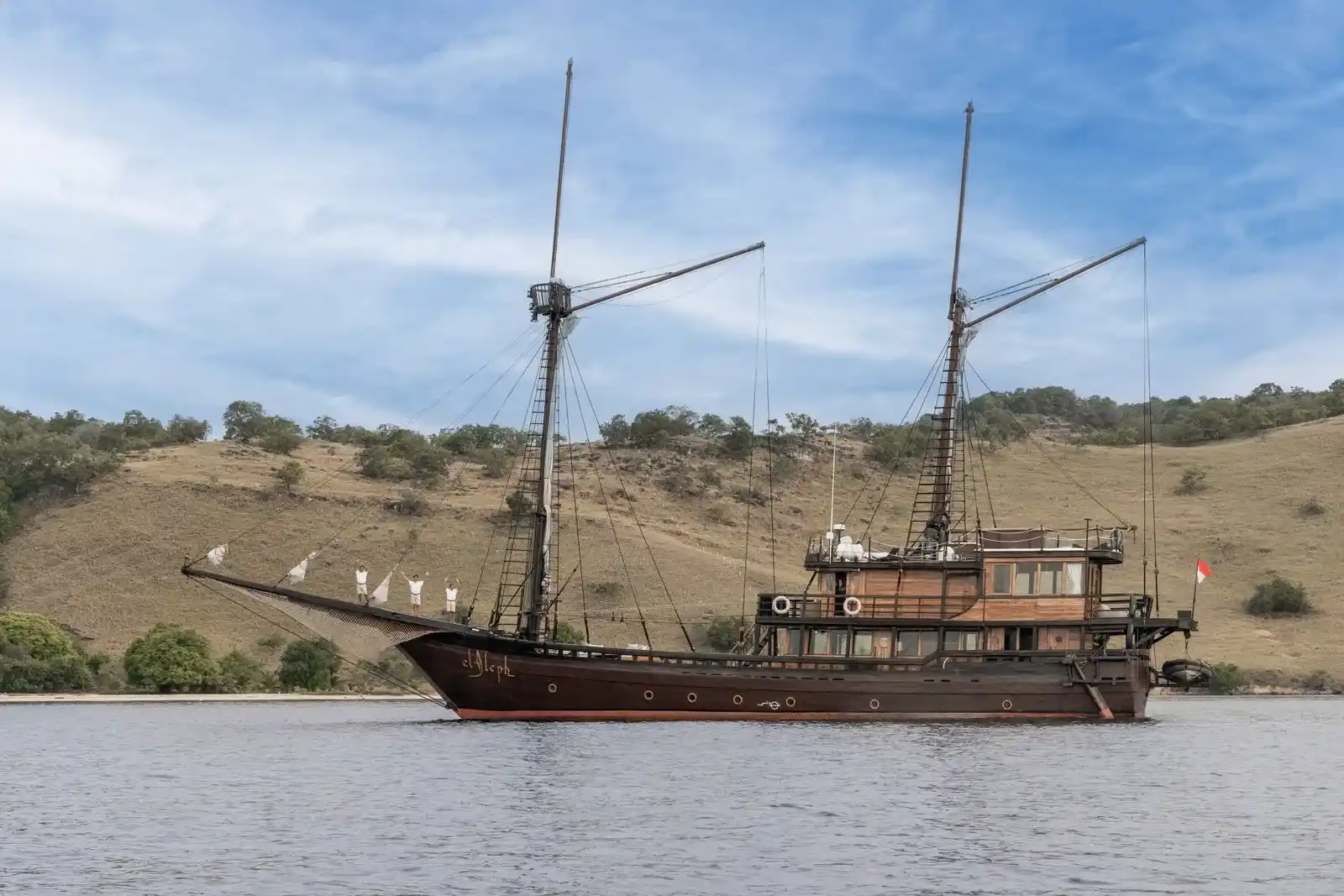
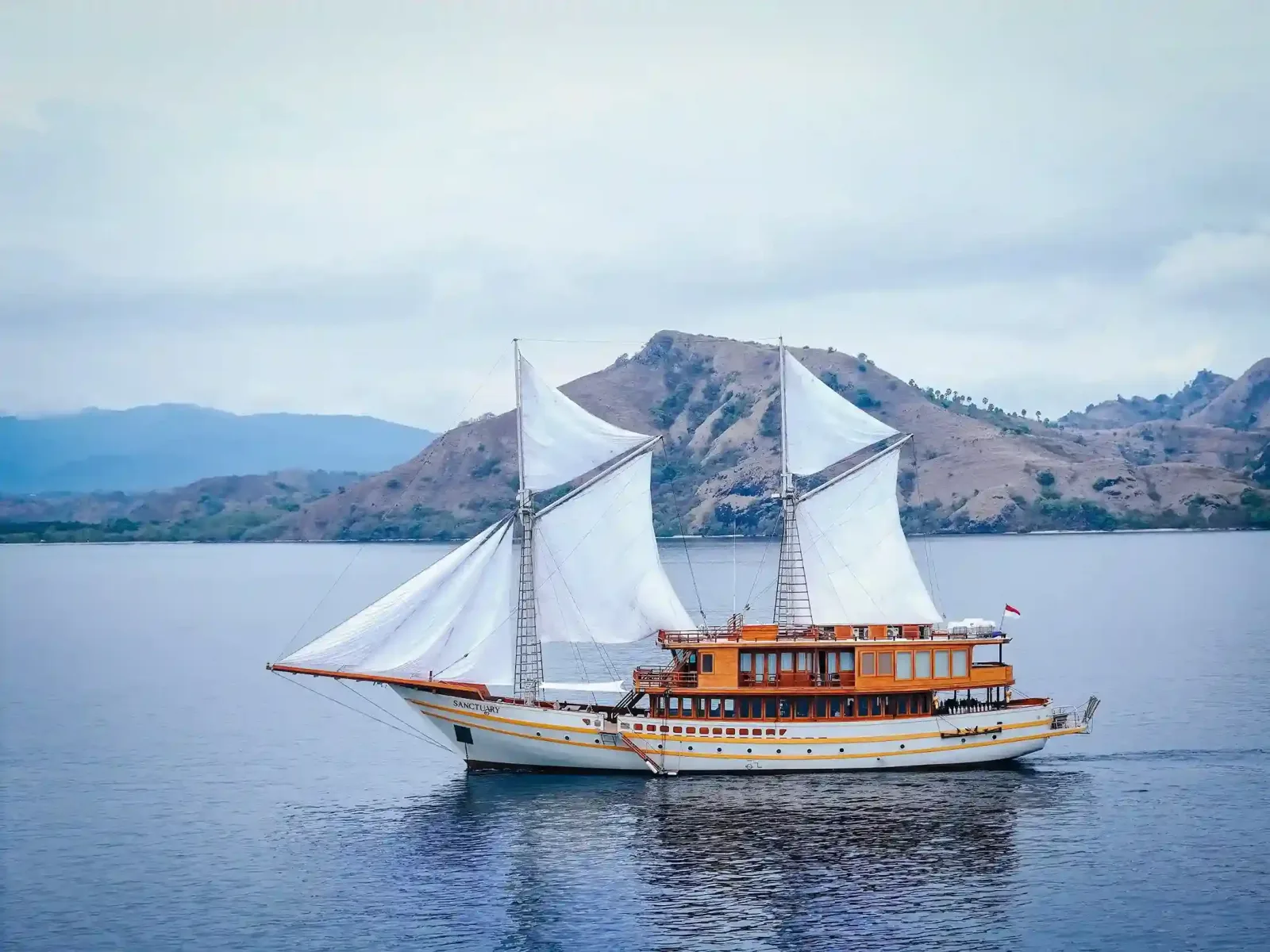
The boat itself
A liveaboard is judged on its dive deck first and its cabins second. Both matter after four dives.
Every diver rigs at once. No queuing to kit up.
Separate tanks for gear and for camera housings.
Premium air and nitrox blending, refilled between dives.
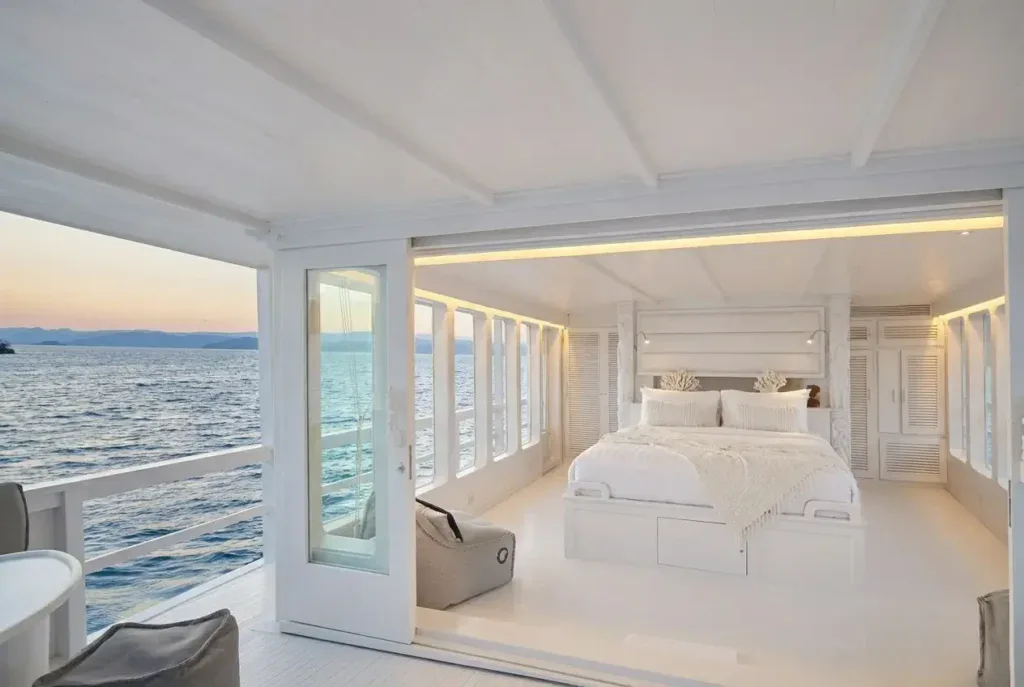
Air conditioning and fresh water — restorative sleep between sessions.
Dry storage and charging for housings and strobes.
Modern navigation to hold a site precisely in current.
If not everyone dives
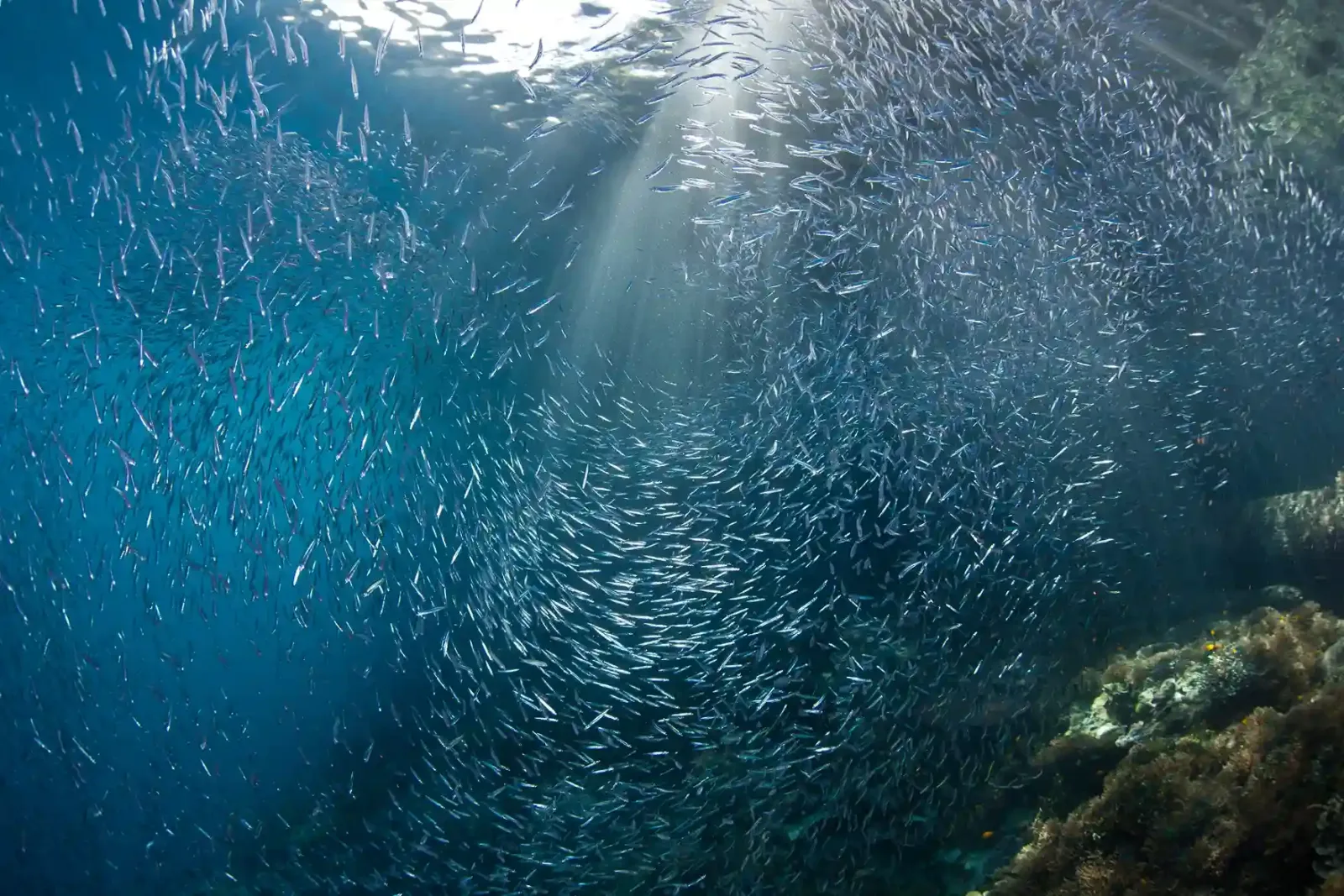
Snorkelling gets the same guides and the same sites. Manta Point in particular is often better from the surface than from below it.
While the divers are down there is island trekking, village visits, paddleboarding and swimming — a parallel week rather than a wait.
How long
Shorter than five and you are paying liveaboard rates for day-boat bottom time. Longer, and the remote sites open up.
5–7 nights
Standard10–14 nights
ExtendedSeasonal
PhenomenaDive-led charter
ShorterSpecialised itineraries exist: macro-focused, pelagic-focused, or conservation-focused with marine biology built in. Say which before the route is drafted.
Six honest answers
Related
Get a firm quote
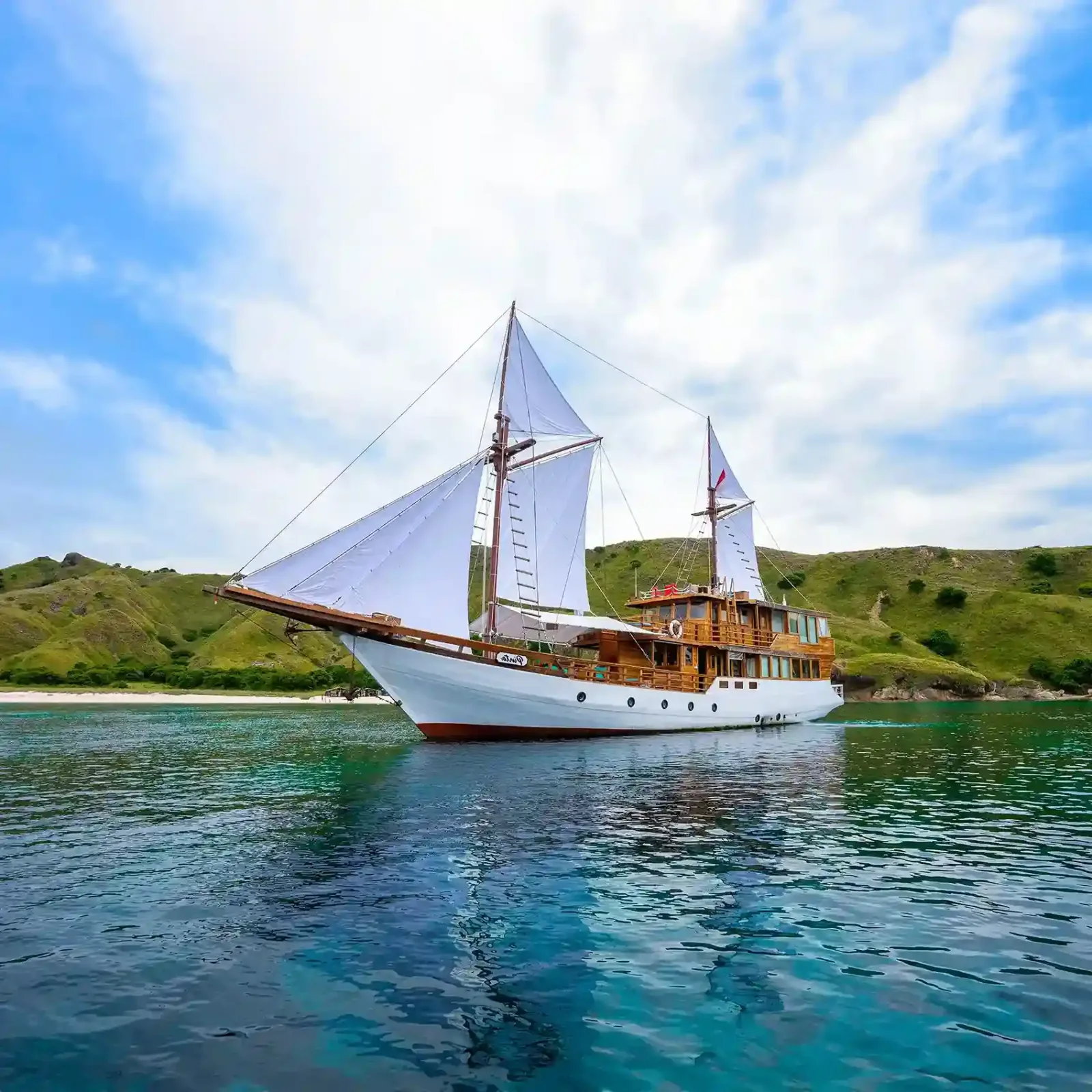
We come back with the vessel, the likely sites for that season, and an itemised figure with nitrox and gear listed separately.
By sending you agree we may reply by email or WhatsApp about your charter.