

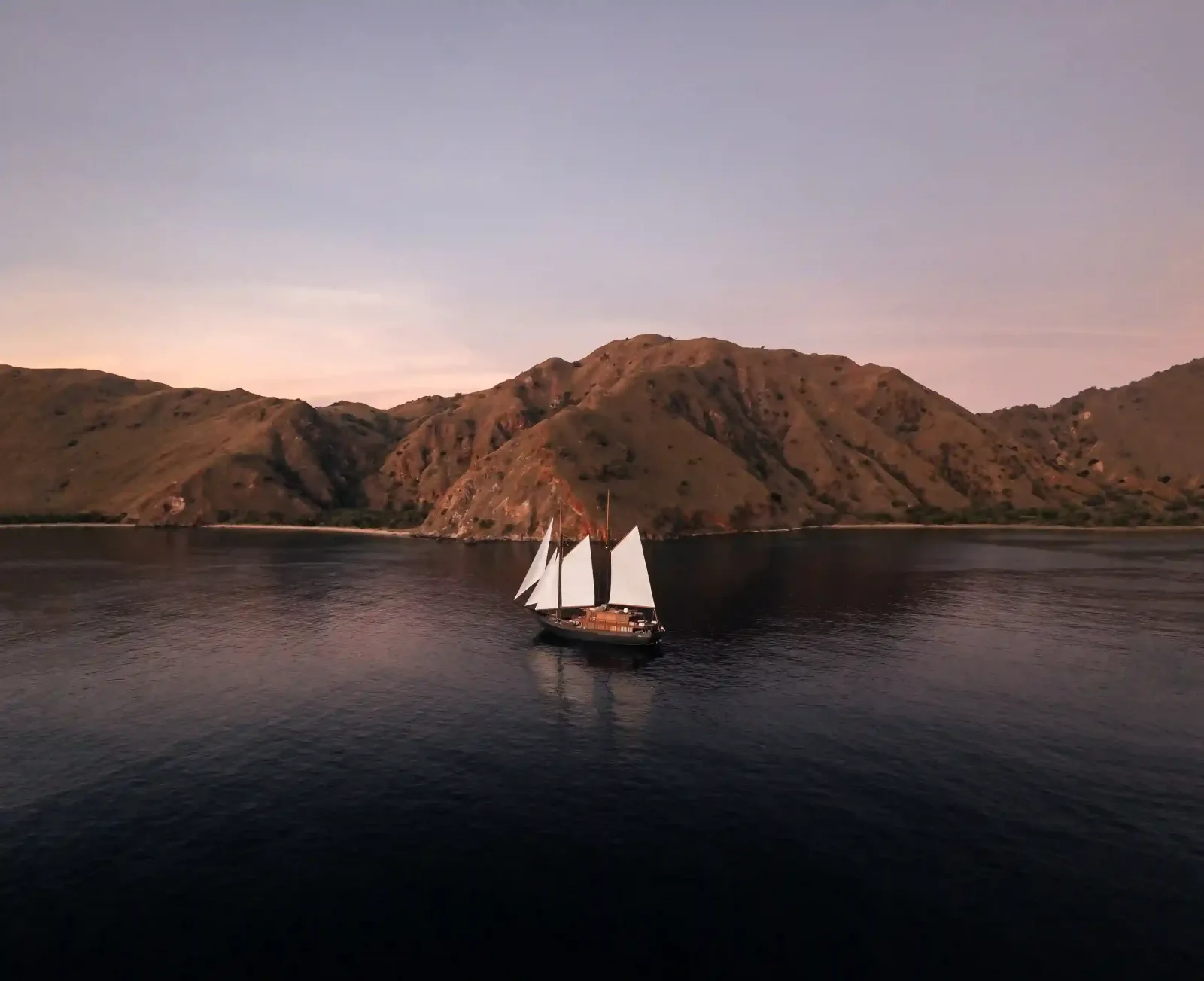
 4–6 guests
 Two-cabin schooner
The intimate end of the fleet. Honeymoons, a pair of couples, or a small family.
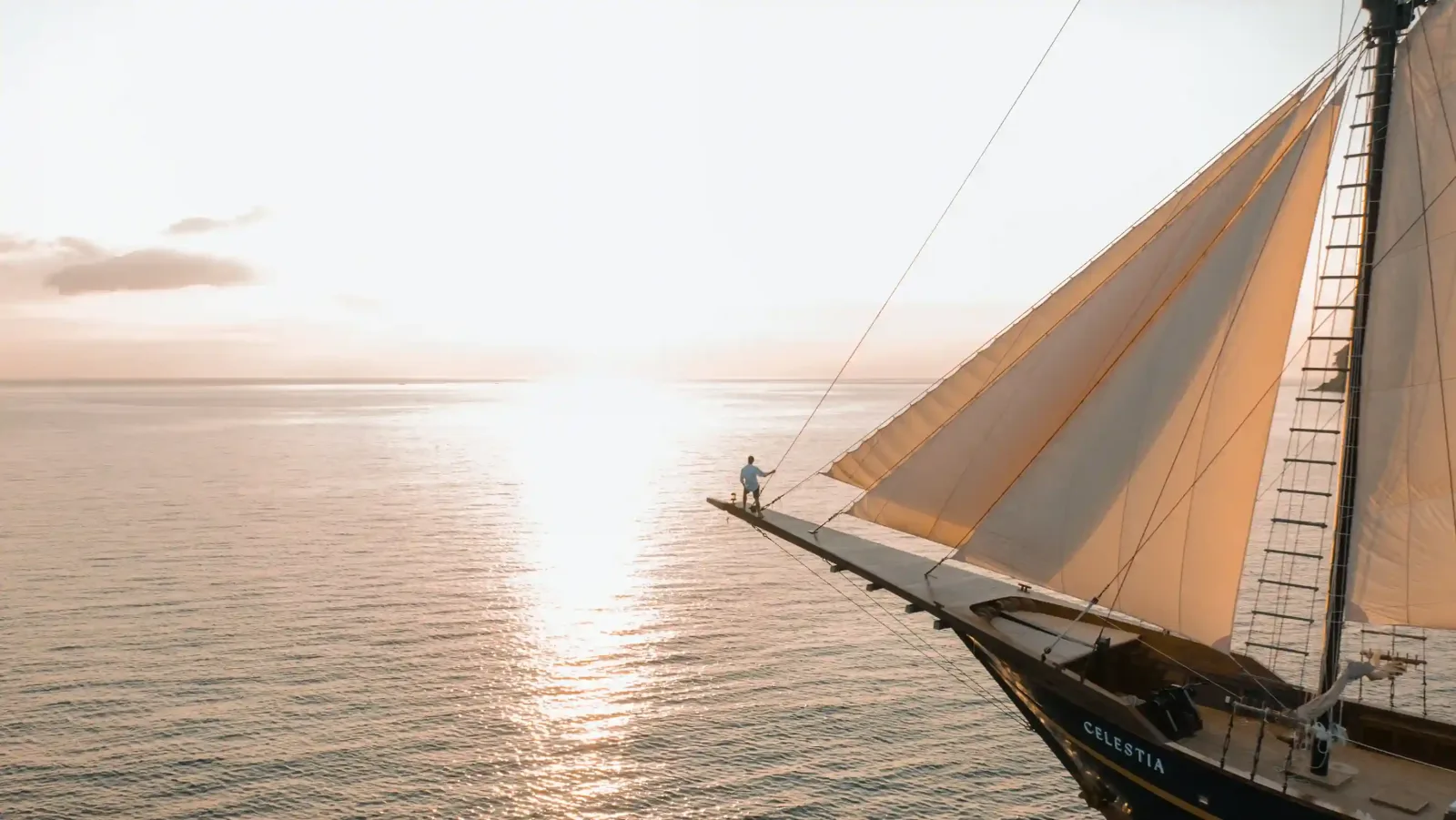
Vessel silo · Traditional rig
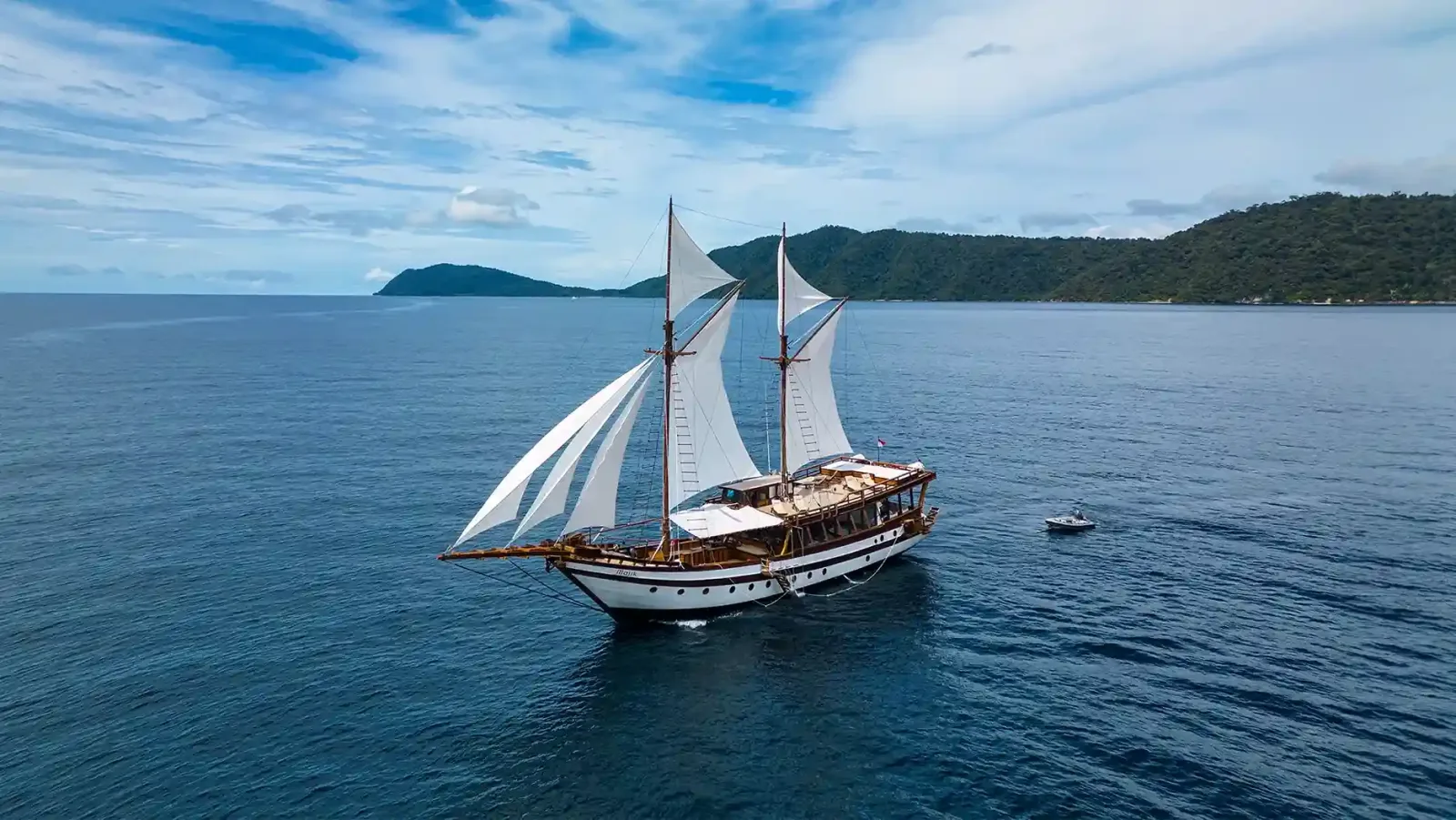
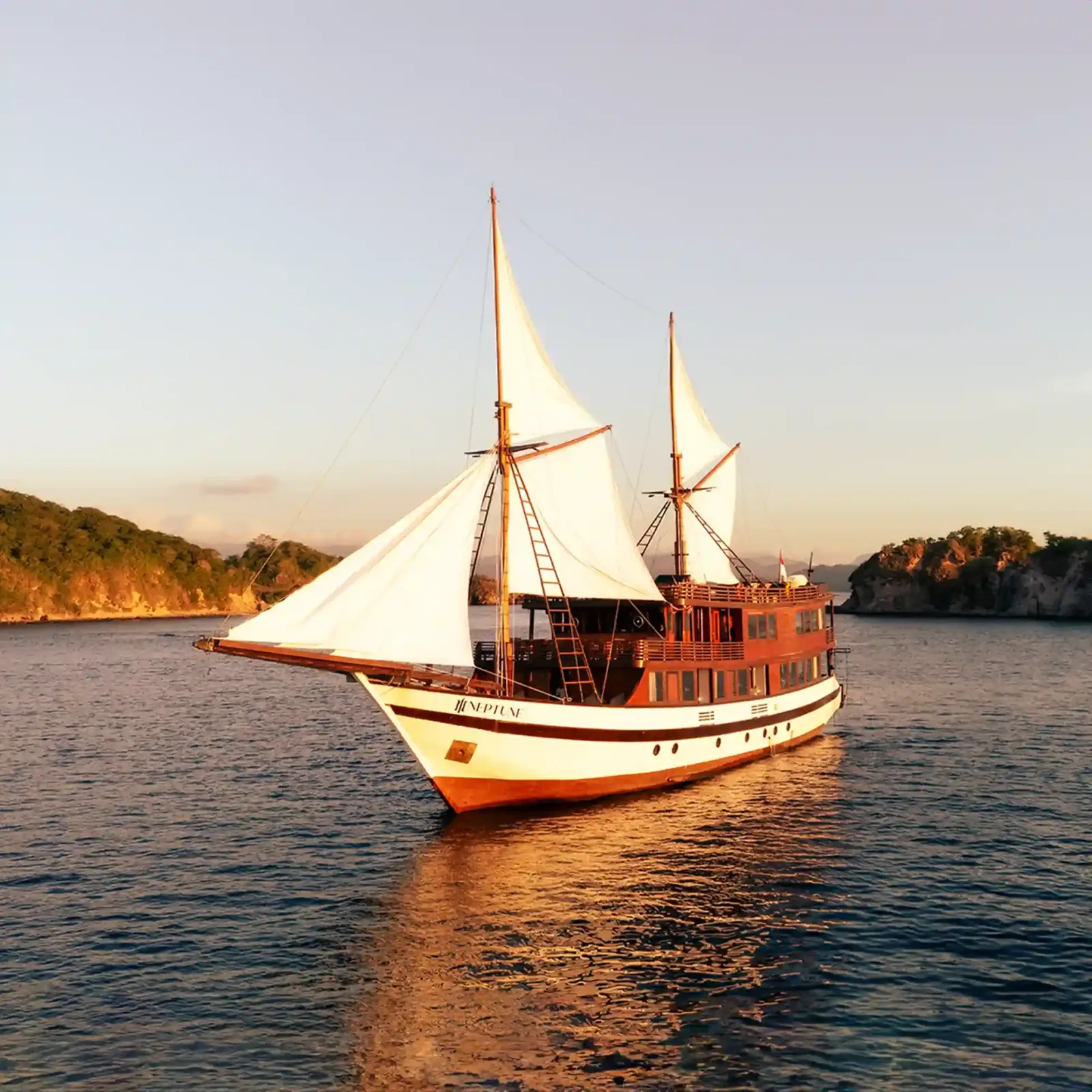
Wooden schooners of a design perfected in Sulawesi without a single drawing. Teak underfoot, canvas overhead, and a cabin with hot water below.
Where it comes from
Phinisi were developed in Sulawesi by shipwrights who worked without written plans. Hull curve, mast placement, sail cut — all of it carried in the hands of one generation and passed to the next.
The few remaining yards still build this way. We use captains and crew trained in those methods, with modern navigation and safety equipment alongside.
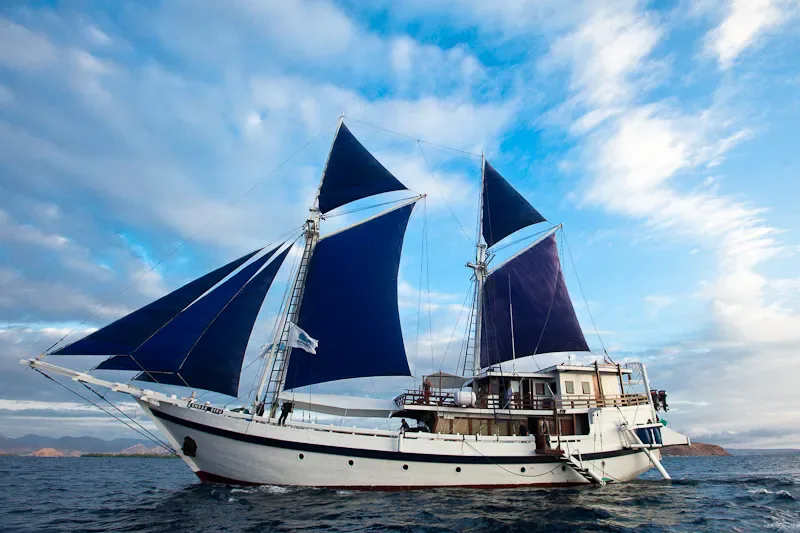
Honestly compared
Both reach the same anchorages. They do not feel remotely the same on the way there.
What we sail
The alternative
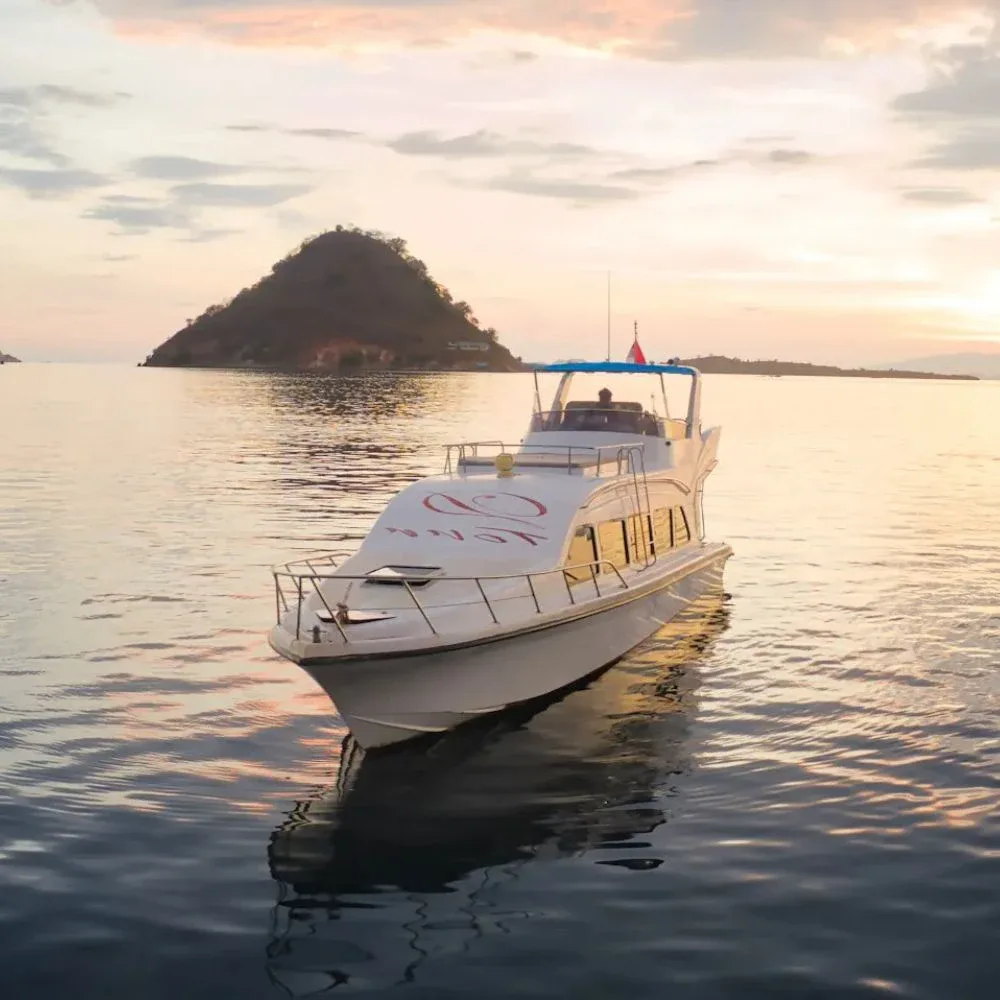
If stabilisers and full air conditioning matter more than sailing, look at the superyacht tier instead. Neither choice is wrong — they answer different questions.
The fleet
Each vessel is inspected and outfitted before the season. Which one you get depends on how many are aboard.
4–6 guests The intimate end of the fleet. Honeymoons, a pair of couples, or a small family.
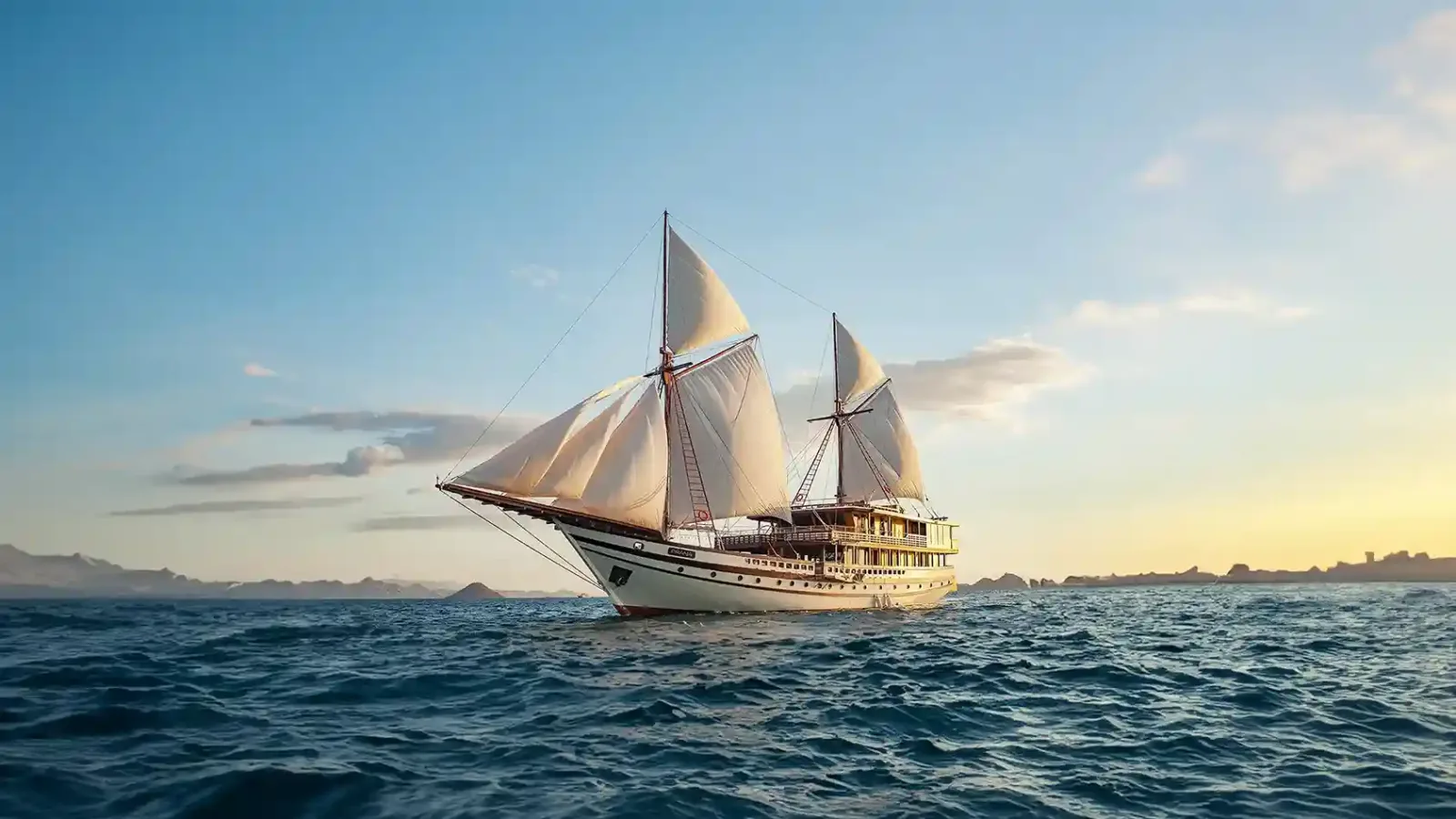 8–10 guests
 The usual choice. Four ensuite cabins, full crew quarters, generous deck.
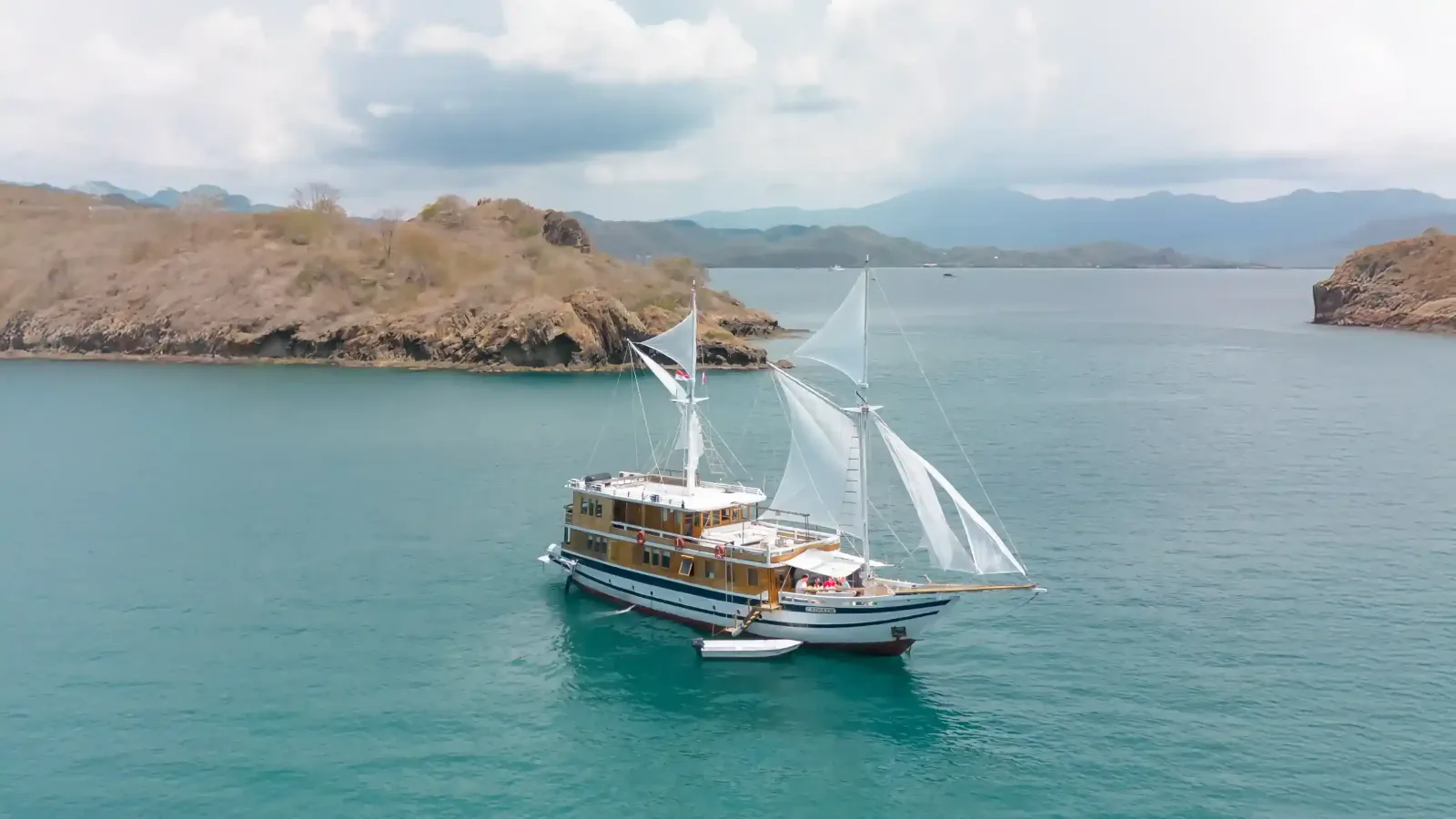 12–16 guests
 Multiple gathering decks and an enlarged galley. Buyouts and larger parties.
You can ask for a specific vessel. We will tell you what is genuinely free on your dates rather than upsell what is not.
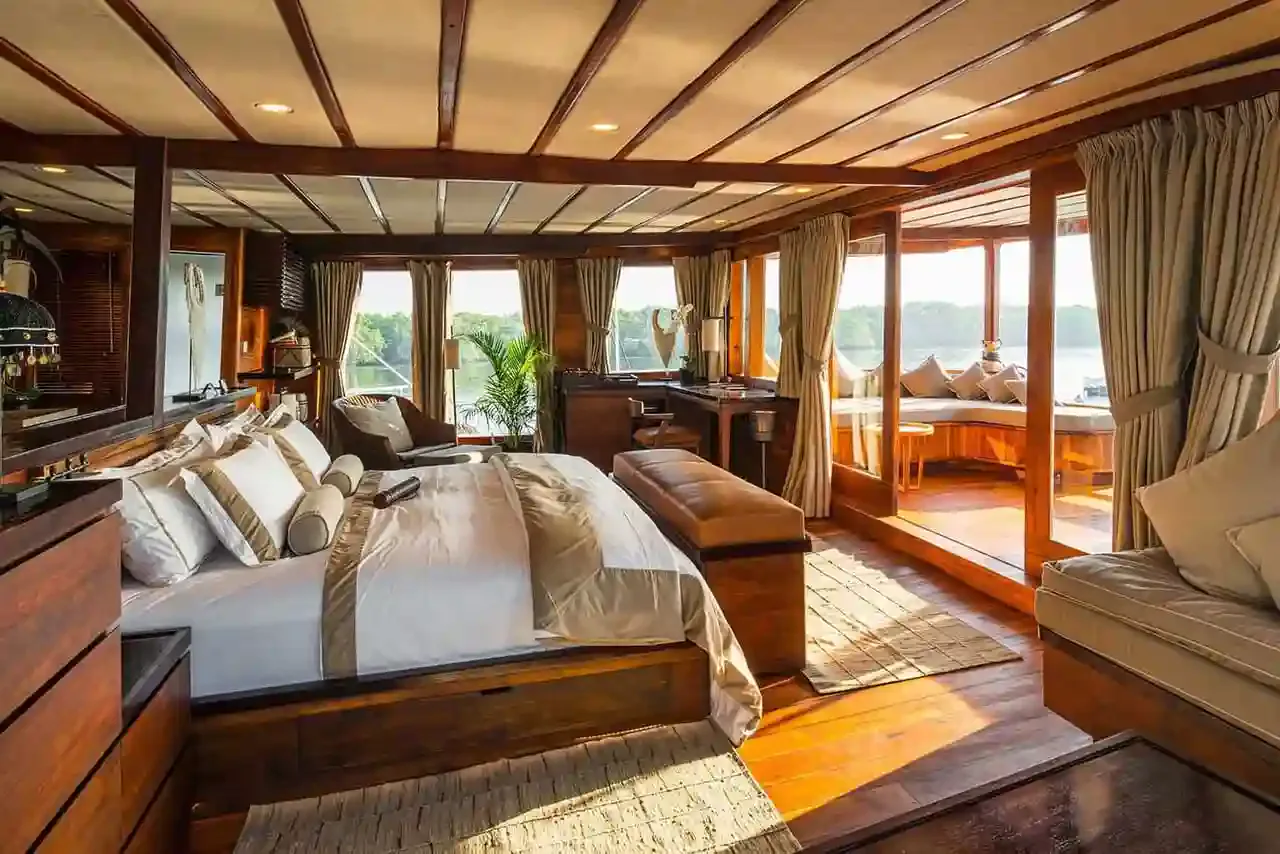
Below deck
Cabins are timber-lined with brass fittings and proper beds — cotton sheets, real mattresses, air conditioning that works.
Most have private heads with hot showers. A few of the smallest vessels share facilities, which some guests prefer and others should know about before booking.
Under way
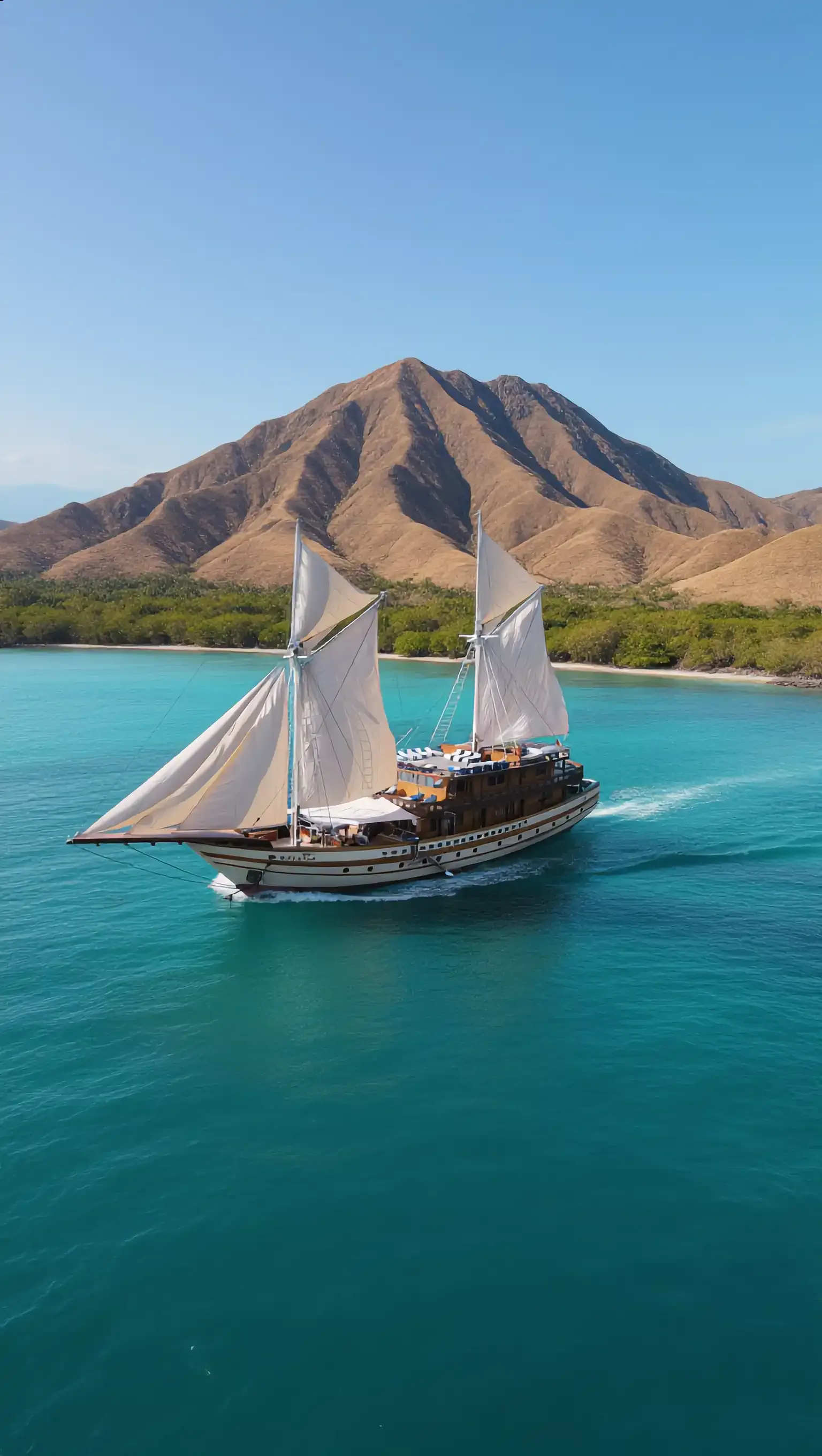
Wind first. The engine is there for schedules and calm days, not for the whole passage.
Yards hoisted by hand, 8 to 12 knots on a good breeze.
Guests who want to trim a sail are welcome. Nobody has to.
Crew still read swell, stars and birds alongside the GPS.
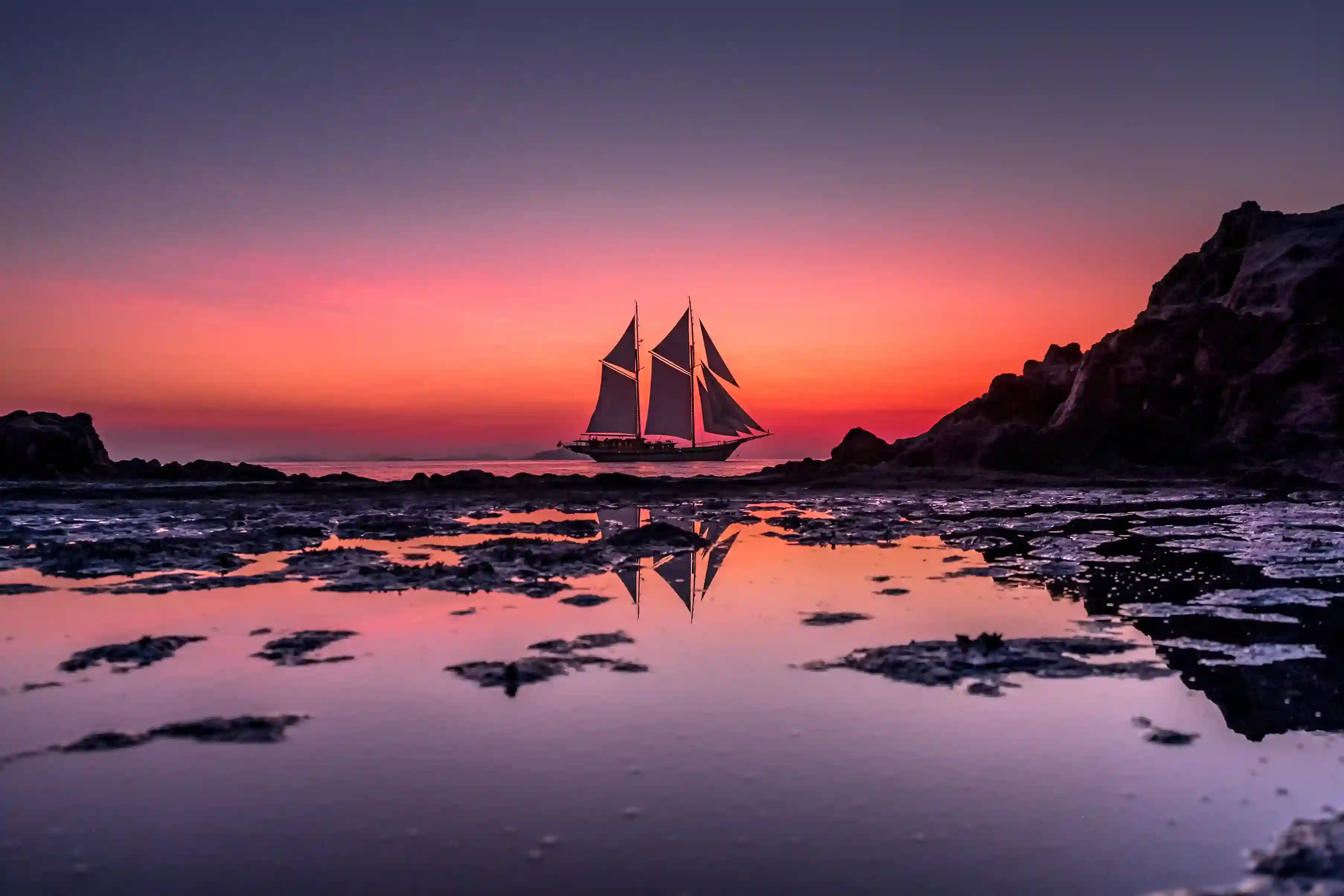
Sailing after dark is the part most guests remember.
Wind propulsion means zero consumption while the canvas is up.
Captains from sailing families, paid into the local economy.
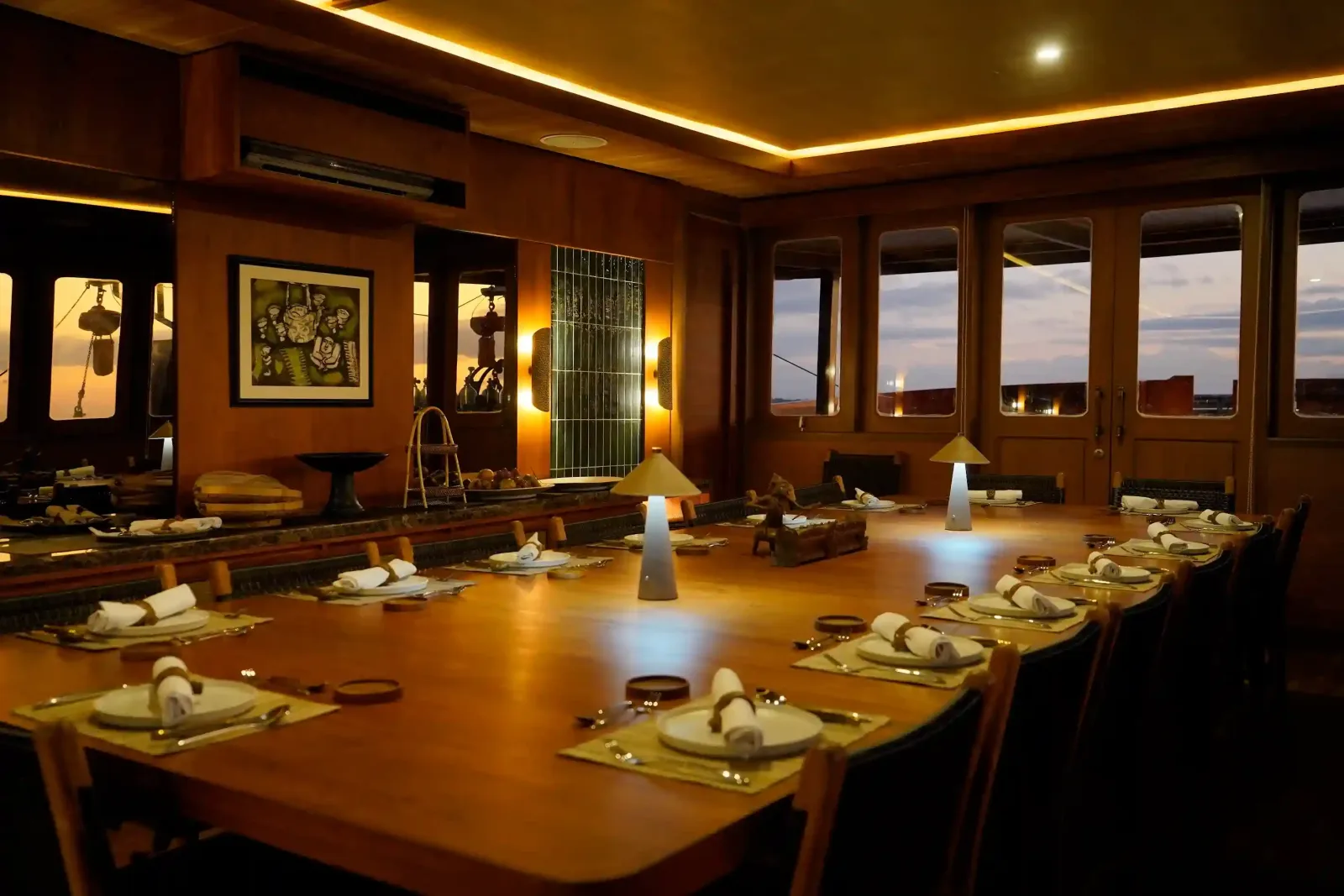
The galley
Phinisi galleys are tight. The chefs who work them are specialists, and the food does not suffer for the square metres.
Menus are agreed before you sail. Fresh fish, Flores vegetables, Indonesian spice, and whatever your table actually eats.
Worth knowing first
A phinisi is an authentic vessel, and authenticity has a texture. None of this is a problem — it is just worth reading before you book.
More swell than a stabilised hull. Gentle, but noticeable if you are prone to seasickness.
Cabins are cooled; decks and saloon rely on airflow.
Timber creaks and smells of oil and salt. That is the boat, not a fault.
No wind means motoring to keep the itinerary honest.
Six honest answers
Same silo
Get a firm quote
Group size, dates and how long you have. We come back with which phinisi is free and a firm number.
By sending you agree we may reply by email or WhatsApp about your charter.